Top Ad 728x90

Monday, March 30, 2026

Brought these to the church potluck

by

These 4-ingredient slow cooker Palm Sunday glazed sweet potatoes are exactly the kind of dish that disappears fast at a church potluck. I brought a crock full of these glossy, caramelized garnet sweet potato rounds to our Palm Sunday lunch, and three ladies literally followed me out to the parking lot asking how I made them. The secret is thick-sliced garnet sweet potatoes that hold their shape, a simple buttery brown sugar glaze with a hint of cinnamon, and the ease of letting the slow cooker do all the work while you’re getting everyone out the door. It’s a low-stress, high-praise recipe that feels special enough for a church holiday but simple enough for any Sunday dinner.
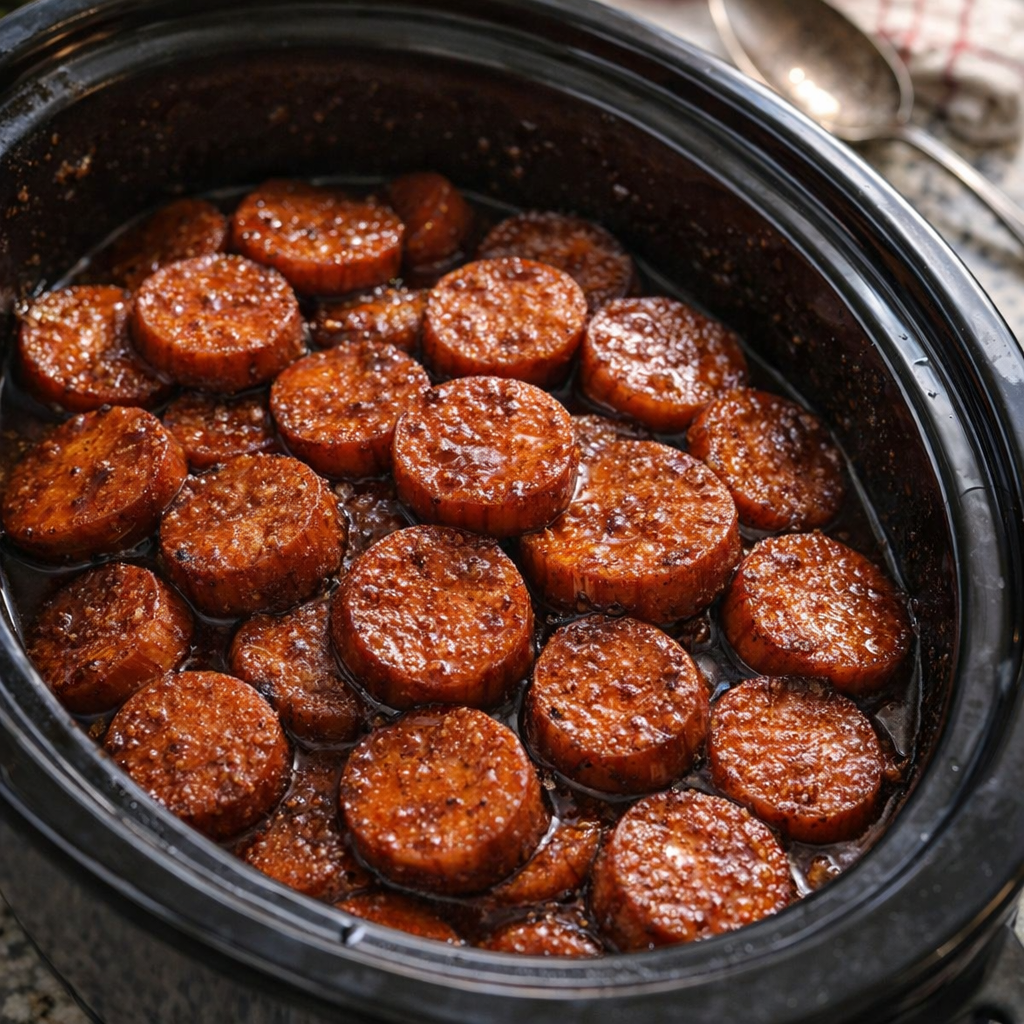
Glazed sweet potatoes in a slow cooker

Serve these glazed sweet potato rounds warm right out of the slow cooker or transferred to a white serving platter so the glossy glaze can really shine. They pair beautifully with ham, roasted chicken, or a simple pot roast at a church potluck or family holiday meal. Add something green on the side, like a crisp salad or steamed green beans, to balance the sweetness. For a more casual spread, they’re great alongside sliders, deviled eggs, and a pan of rolls—people will treat them like both a side dish and a dessert.

4-Ingredient Slow Cooker Palm Sunday Glazed Sweet Potatoes

Servings: 8-10

Ingredients

3 pounds garnet sweet potatoes, peeled and cut into 3/4-inch thick rounds
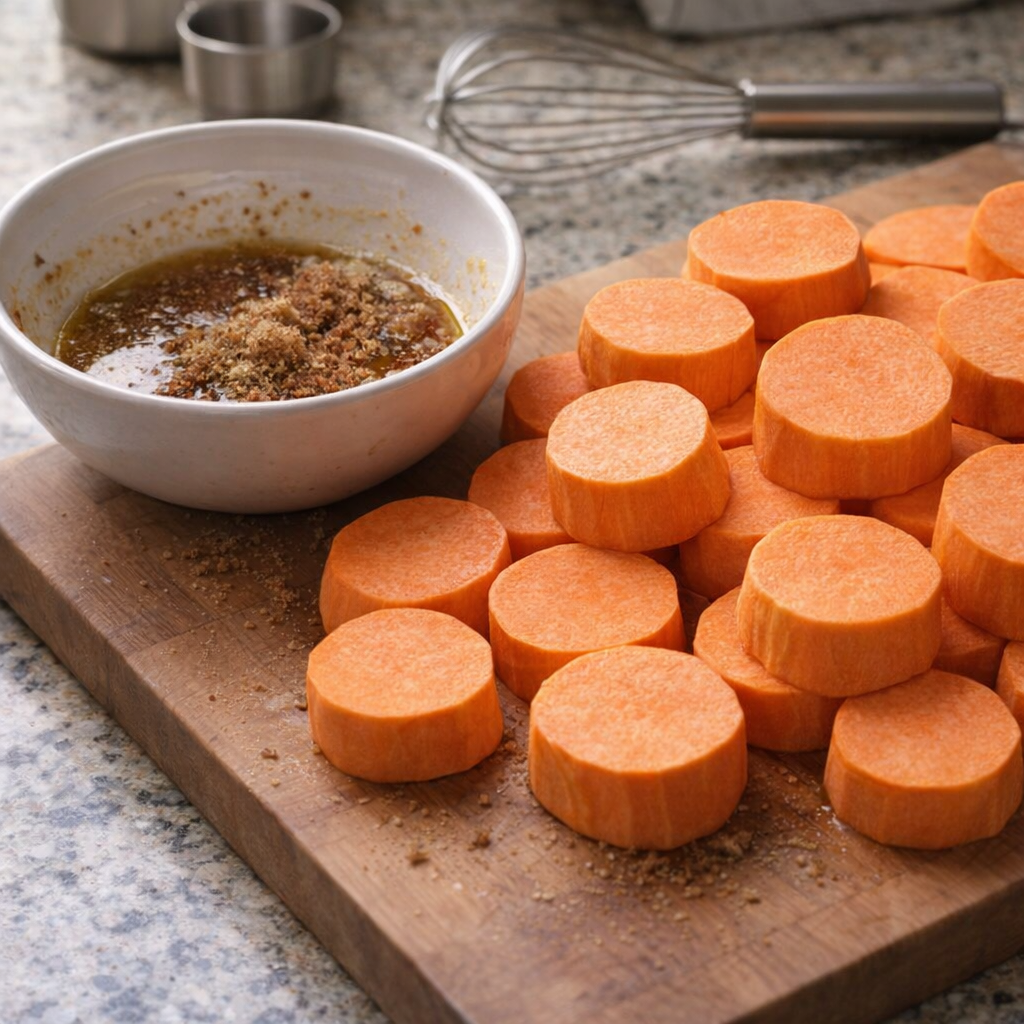
1 cup packed light brown sugar
4 tablespoons (1/2 cup) unsalted butter, melted
1 teaspoon ground cinnamon
Optional pinch of salt, to taste (does not count toward 4 ingredients)

Sliced sweet potatoes and glaze ingredients

Directions

Prep the sweet potatoes: Peel the garnet sweet potatoes and slice them into thick 3/4-inch rounds. The thicker slices help them hold their shape and look pretty and caramelized on a platter instead of turning mushy.

Grease the slow cooker: Lightly coat the inside of a 5- to 6-quart slow cooker with nonstick spray or a thin layer of butter to help prevent sticking and make cleanup easier.

Make the glaze: In a medium bowl, whisk together the melted butter, brown sugar, and ground cinnamon until you have a smooth, glossy mixture. If you like, add a small pinch of salt to balance the sweetness.
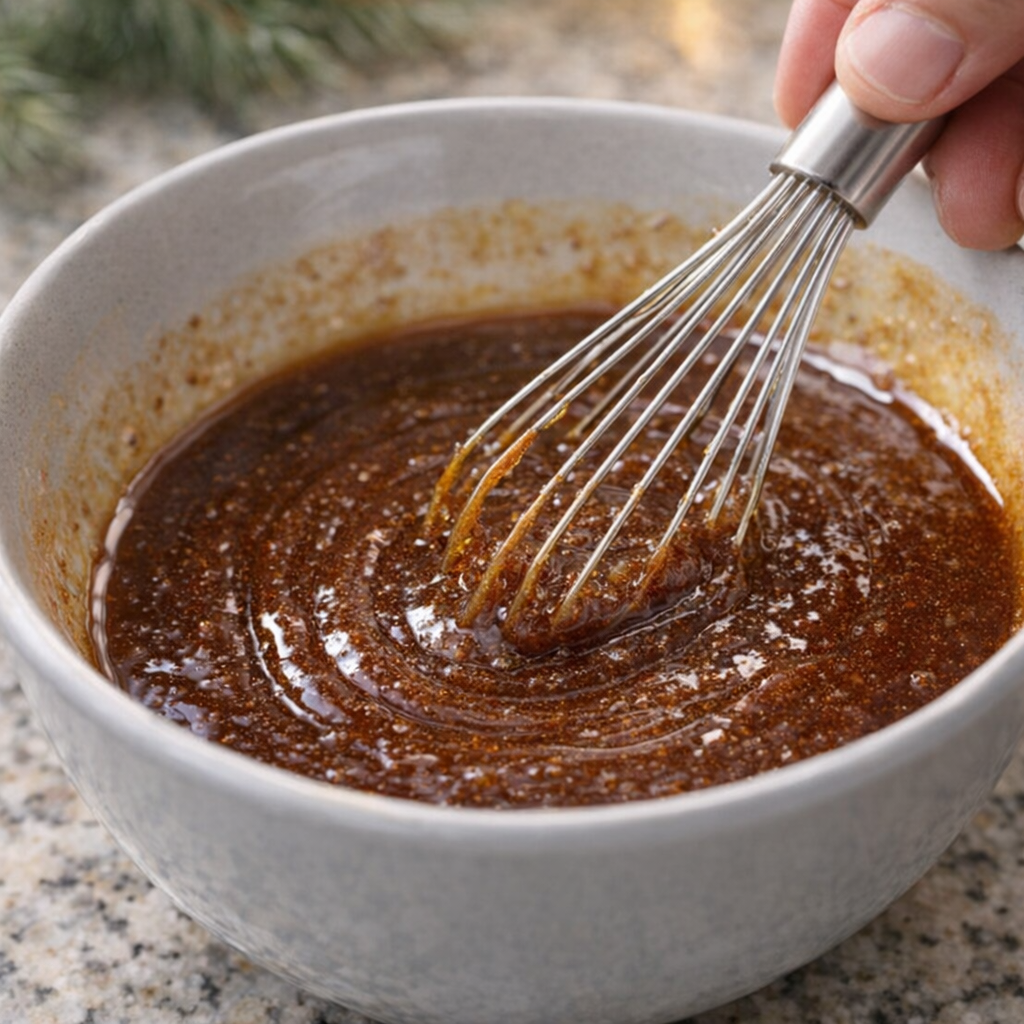
Brown sugar cinnamon glaze being whisked

Layer the sweet potatoes: Arrange a single, slightly overlapping layer of sweet potato rounds in the bottom of the slow cooker. Spoon a few tablespoons of the glaze over the layer. Repeat with remaining sweet potatoes and glaze, finishing with a generous amount of glaze on top so every slice gets coated as it cooks.

Slow cook: Cover and cook on LOW for 3 1/2 to 4 hours, or until the sweet potatoes are tender when pierced with a fork but still holding their round shape. Avoid stirring during cooking so the rounds don’t break apart.

Thicken and coat with glaze: Once the sweet potatoes are tender, gently tilt the lid so condensation doesn’t drip back into the crock, then remove it. Carefully spoon the hot glaze from the bottom over the top rounds to make them extra glossy. If the glaze seems thin, leave the lid off and let the sweet potatoes sit on WARM or LOW for 10–15 minutes; the glaze will thicken slightly as it stands.
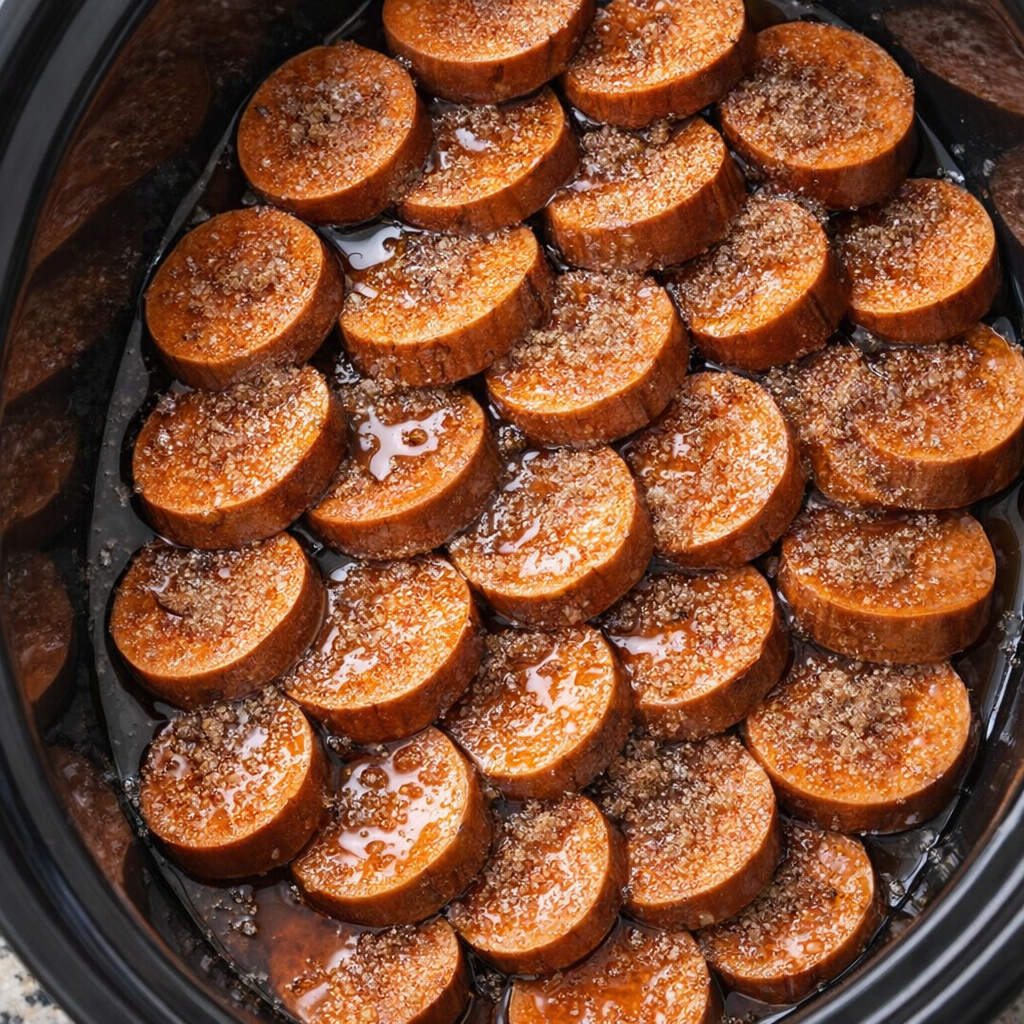
Sweet potatoes layered in the slow cooker

Serve for that potluck “wow” factor: For a church potluck or holiday table, use a slotted spatula to transfer the sweet potato rounds in neat rows onto a white serving platter so the caramelized edges and shiny glaze are visible. Spoon some of the remaining glaze over the top. Serve warm and be ready for recipe requests in the parking lot.

Variations & Tips

Make-ahead tip: You can peel and slice the garnet sweet potatoes the night before and store them in a large bowl of cold water in the fridge. In the morning, drain and pat them dry, then proceed with the recipe—this is a lifesaver when you’re trying to get kids dressed and a dish to church on time.
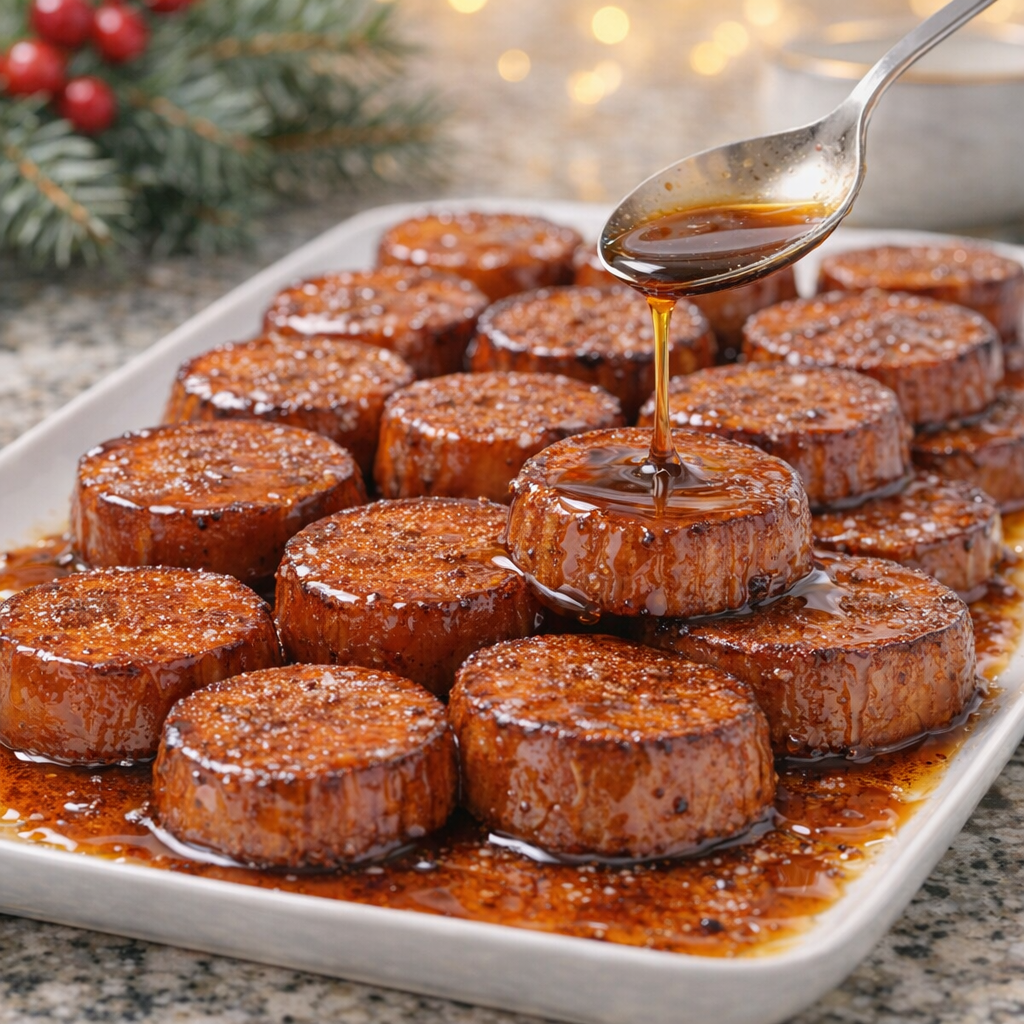
Plated glazed sweet potato rounds on a serving platter

Extra-caramelized edges: For a more “oven-roasted” look like a food photo, transfer the cooked rounds to a parchment-lined baking sheet and broil on the top rack for 2–4 minutes, watching closely, just until the edges deepen in color and the glaze bubbles.

Orange twist: Replace 2 tablespoons of the melted butter with 2 tablespoons of orange juice and add 1/2 teaspoon of grated orange zest to the glaze for a bright, citrusy note that still feels very holiday.

Warm spice version: Swap half of the cinnamon for pumpkin pie spice or add a pinch of nutmeg or cloves for a more complex, cozy flavor—great for Christmas or Thanksgiving potlucks.

Extra-saucy: If your crowd loves lots of glaze, increase the brown sugar to 1 1/4 cups and the butter to 6 tablespoons; cook time stays the same, but you’ll have more syrup to spoon over the platter.

Dairy-free: Use a dairy-free stick butter substitute in place of the butter; the flavor will be slightly different, but the sweet potatoes will still turn out tender and glossy.

Leftovers: Store leftovers in an airtight container in the fridge for up to 4 days. Reheat gently in the microwave or covered in a low oven, adding a splash of water if needed to loosen the glaze.

 

My mother in law demands I bring these

by


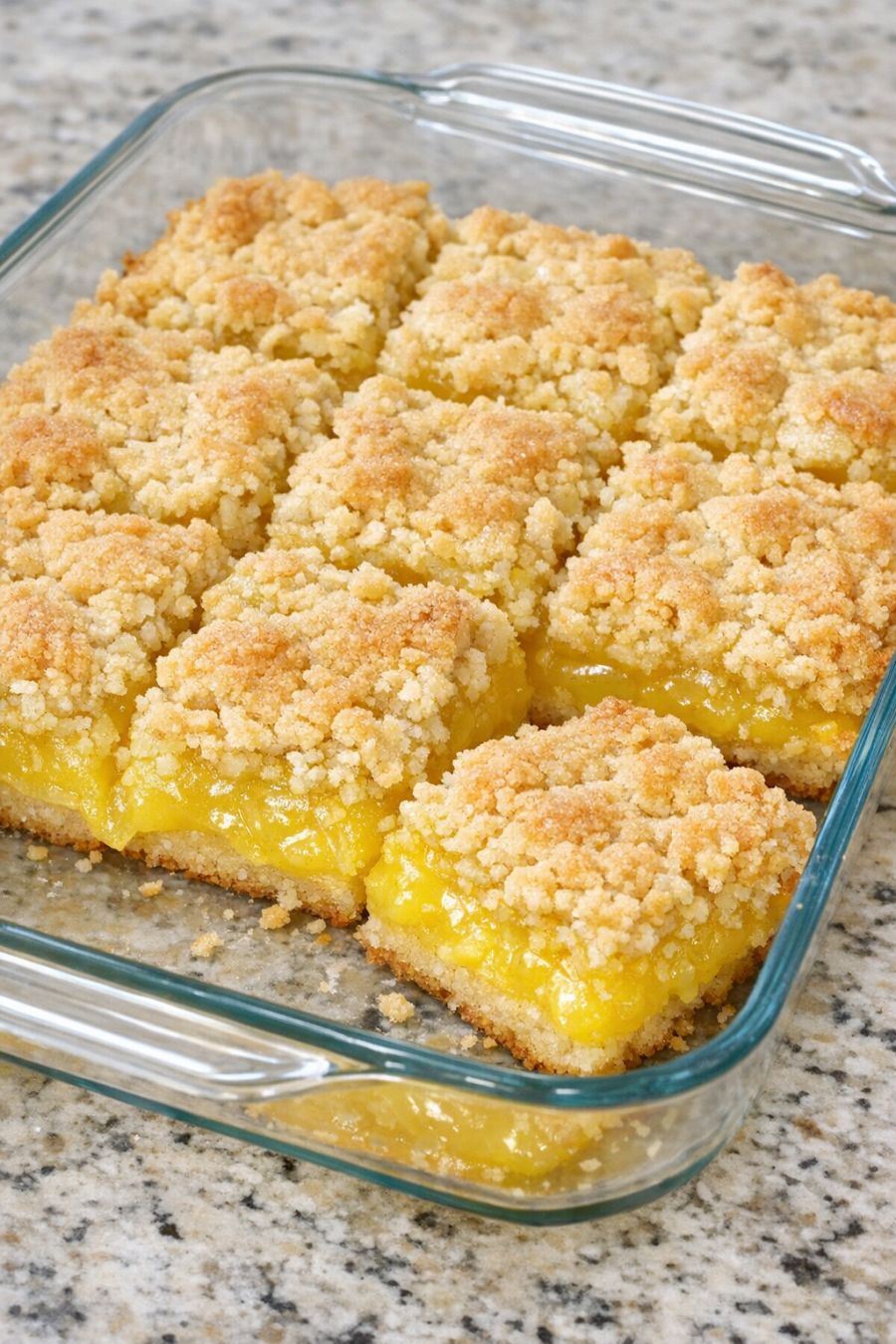
 These 3-ingredient lemon bars are the dessert my mother-in-law insists I bring to every family gathering—and she’s right, they vanish before the main course ever hits the table. This is a very Midwestern, potluck-friendly shortcut recipe that leans on a boxed lemon cake mix and canned lemon pie filling to deliver bright citrus flavor with almost no effort. Melted butter transforms the cake mix into a soft, crumbly crust and topping, while the pie filling bakes into a glossy, vibrant yellow layer. It’s the kind of practical, crowd-pleasing recipe busy home cooks keep in their back pocket for holidays, church suppers, and last-minute invitations.

Serve these lemon bars chilled or at room temperature, cut into small squares so they’re easy to grab from the glass baking dish on a buffet. They pair nicely with hot coffee or black tea, which balances the sweetness and bright lemon flavor. For a more complete dessert spread, offer a bowl of fresh berries or a simple fruit salad alongside. If you’d like something creamy, a small dollop of lightly sweetened whipped cream on each bar works well, but they’re designed to stand on their own—especially at casual gatherings where people are nibbling as they chat.
3-Ingredient Lemon Bars
Servings: 16
Ingredients
1 box (15.25 to 16.5 ounces) lemon cake mix
1/2 cup (1 stick, 113 g) unsalted butter, melted and slightly cooled
1 can (21 ounces) lemon pie filling
Directions
Preheat your oven to 350°F (175°C). Lightly grease a clear 9x13-inch glass baking dish with butter or nonstick spray. This helps the bars release easily and lets you see the layers as they bake.
In a medium mixing bowl, add the dry lemon cake mix. Pour in the melted, slightly cooled butter. Stir with a fork or spatula until the mixture is evenly moistened and forms soft, crumbly clumps—like damp sand. You should not see any dry patches of cake mix.
Press about 2/3 of the buttery cake mixture evenly into the bottom of the prepared glass baking dish. Use your fingertips or the bottom of a measuring cup to press it into a firm, even layer, making sure to reach all corners. This will be your crust.
Open the can of lemon pie filling and spoon it over the crust. Gently spread the filling into an even layer with an offset spatula or the back of a spoon, taking care not to pull up the crust underneath. You want a bright, smooth yellow layer from edge to edge.
Sprinkle the remaining 1/3 of the cake-and-butter mixture evenly over the lemon pie filling. Let it fall in small clumps and crumbles rather than packing it down; this will create that slightly crumbly, golden top once baked.
Place the baking dish on the center rack of the preheated oven. Bake for 25 to 30 minutes, or until the top is lightly golden in spots and the lemon filling is bubbling gently around the edges. The center will still look soft but should no longer appear very loose or wet.
Remove the dish from the oven and place it on a cooling rack. Allow the lemon bars to cool completely in the glass dish; the filling will set as they cool. For cleaner cuts and a firmer texture, chill the cooled bars in the refrigerator for at least 1 to 2 hours before slicing.
Once fully cooled (and chilled, if you prefer), use a sharp knife to cut the lemon bars into 16 squares or smaller bite-sized pieces. Wipe the knife between cuts for neater edges. Serve directly from the clear glass baking dish so everyone can see the bright yellow filling and golden, crumbly top.
Variations & Tips
For a slightly less sweet bar, use a yellow or white cake mix instead of lemon; you’ll still get plenty of citrus from the pie filling, but with a softer, more buttery flavor. If you prefer a tangier profile, stir 1 to 2 tablespoons of freshly squeezed lemon juice and a bit of finely grated lemon zest into the canned pie filling before spreading it over the crust. To add subtle texture, mix 1/2 cup of unsweetened shredded coconut or finely chopped toasted almonds into the crust-and-topping mixture. For a prettier presentation, dust the cooled bars with powdered sugar just before serving—this is especially nice if you’re bringing them to a holiday table or a bridal shower. If your gatherings run long and you worry about the bars softening, bake them on the longer end of the time range so the top is a touch more golden and the filling a bit firmer; they’ll hold up better on a buffet. Finally, for smaller or more intimate get-togethers, you can halve the recipe and bake it in an 8x8-inch glass dish, checking for doneness a few minutes earlier.

My neighbor brought this to a potluck

by


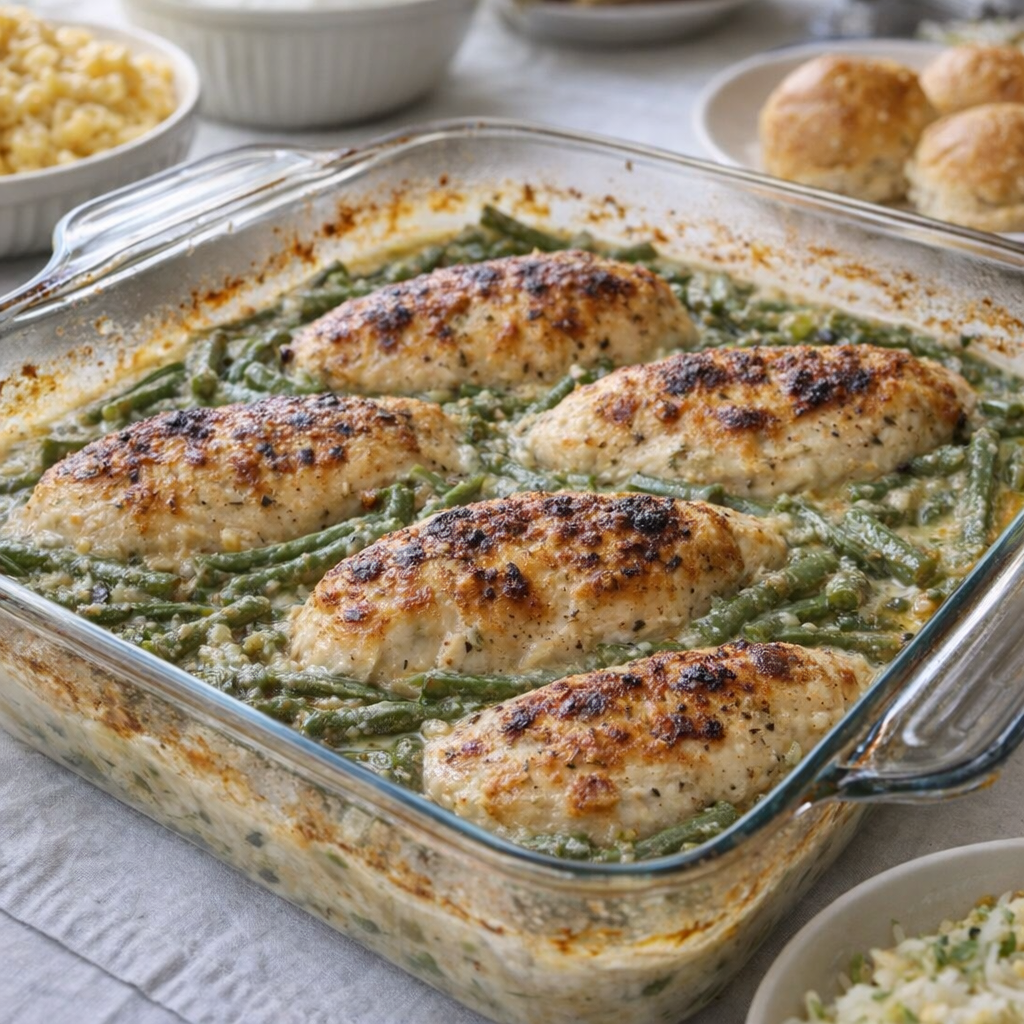
 My neighbor Ruth brought this Amish-style chicken and green bean bake to a church potluck years ago, and I remember the way the room went quiet for a moment when folks took their first bite. Then the questions started flying: “Who made this?” and “Can I get that recipe?” No one could believe it was only four ingredients. It’s the kind of humble, oven-baked dish that feels right at home on a Midwestern table—simple pantry staples, a glass baking dish, and a little time in the oven until the edges bubble and brown.

Church potluck casserole dish on a folding table

This is comfort food you can put together in minutes on a busy evening, but it tastes like it’s been in the family for generations.

Serve this chicken and green bean bake straight from the glass dish while it’s still bubbling around the edges. It’s wonderful over a scoop of fluffy mashed potatoes or buttered egg noodles to catch the savory juices. A simple side of sliced tomatoes or a crisp lettuce salad with a light vinaigrette balances the richness. If you like, add a basket of warm dinner rolls or buttered bread to soak up every last bit of the sauce.

Oven Baked 4-Ingredient Amish Chicken and Green Bean Bake

Servings: 4

Ingredients

2 pounds bone-in, skin-on chicken thighs or drumsticks

1 (24-ounce) bag frozen cut green beans, unthawed
1 (10.5-ounce) can condensed cream of mushroom soup
1 (1-ounce) packet dry onion soup mix

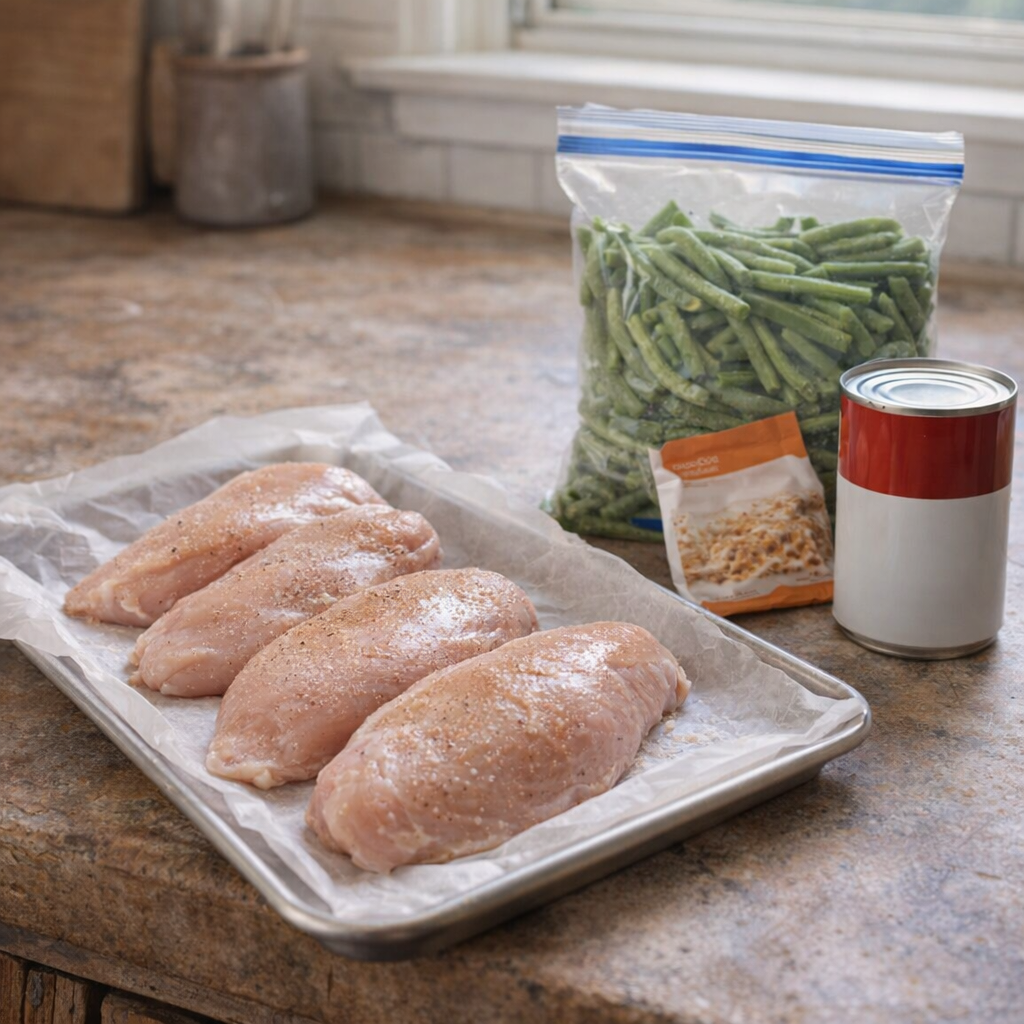
Four simple casserole ingredients on a farmhouse counter

Directions

Preheat your oven to 375°F (190°C). Lightly grease a 9x13-inch glass baking dish so the edges don’t stick as they brown.

Spread the frozen green beans in an even layer in the bottom of the glass baking dish. No need to thaw them first; they’ll cook up tender in the oven.

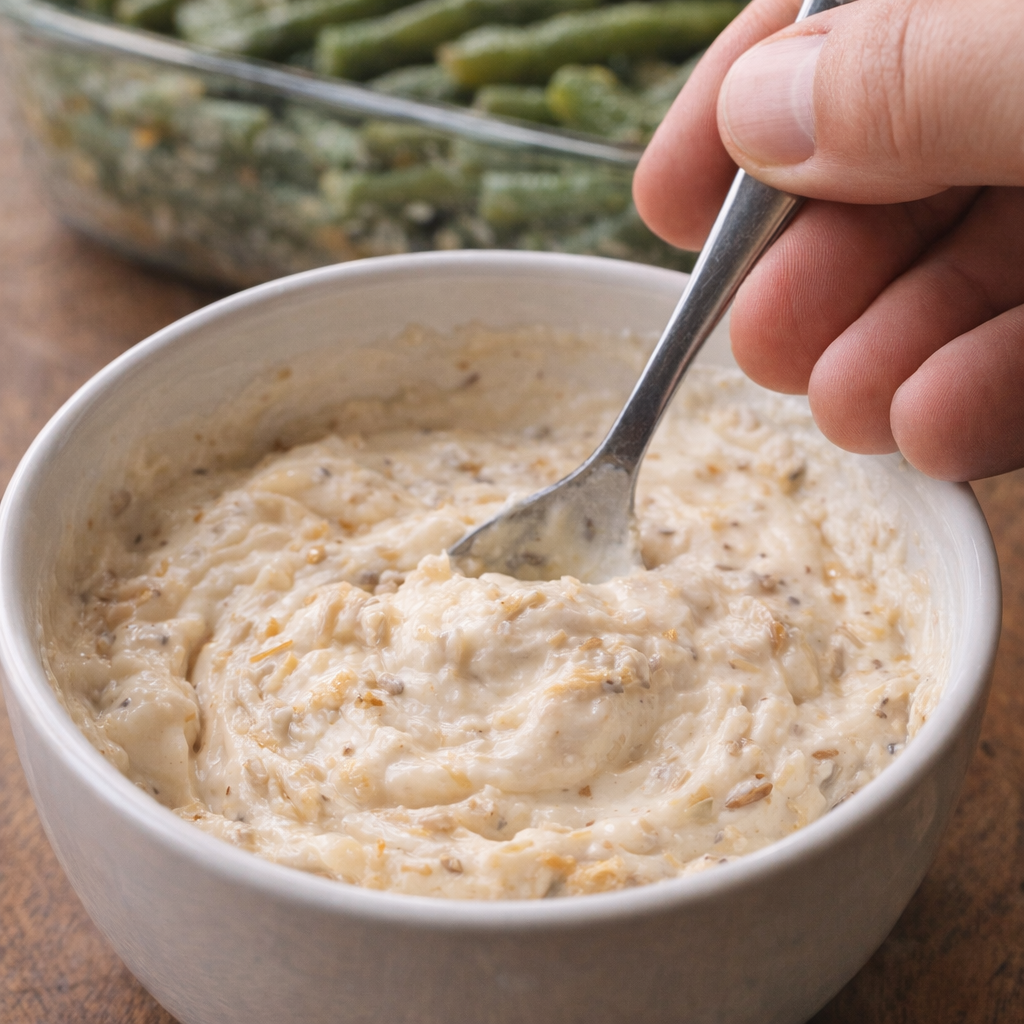
In a small bowl, stir together the condensed cream of mushroom soup and the dry onion soup mix until well combined. It will be thick and very flavorful.

Soup mixture being stirred in a small bowl

Spoon the soup mixture over the green beans and gently spread it so it covers most of the beans. Don’t worry if a few beans peek through; the juices from the chicken will mingle with the sauce as it bakes.

Pat the chicken pieces dry with paper towels and arrange them skin-side up on top of the sauced green beans, spacing them evenly so they brown nicely. Press them down just enough so they sit snugly in the sauce but still have the skin exposed.

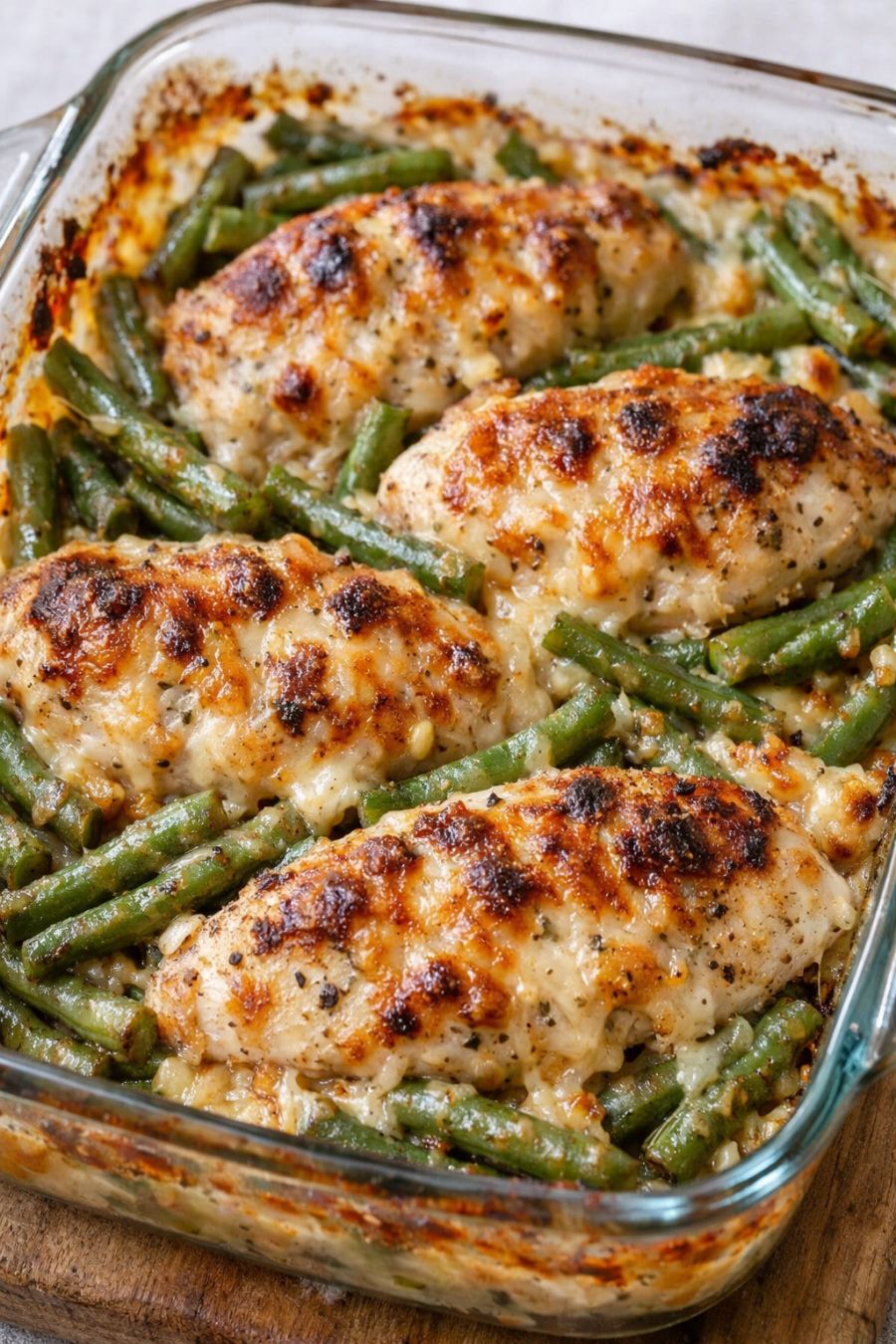
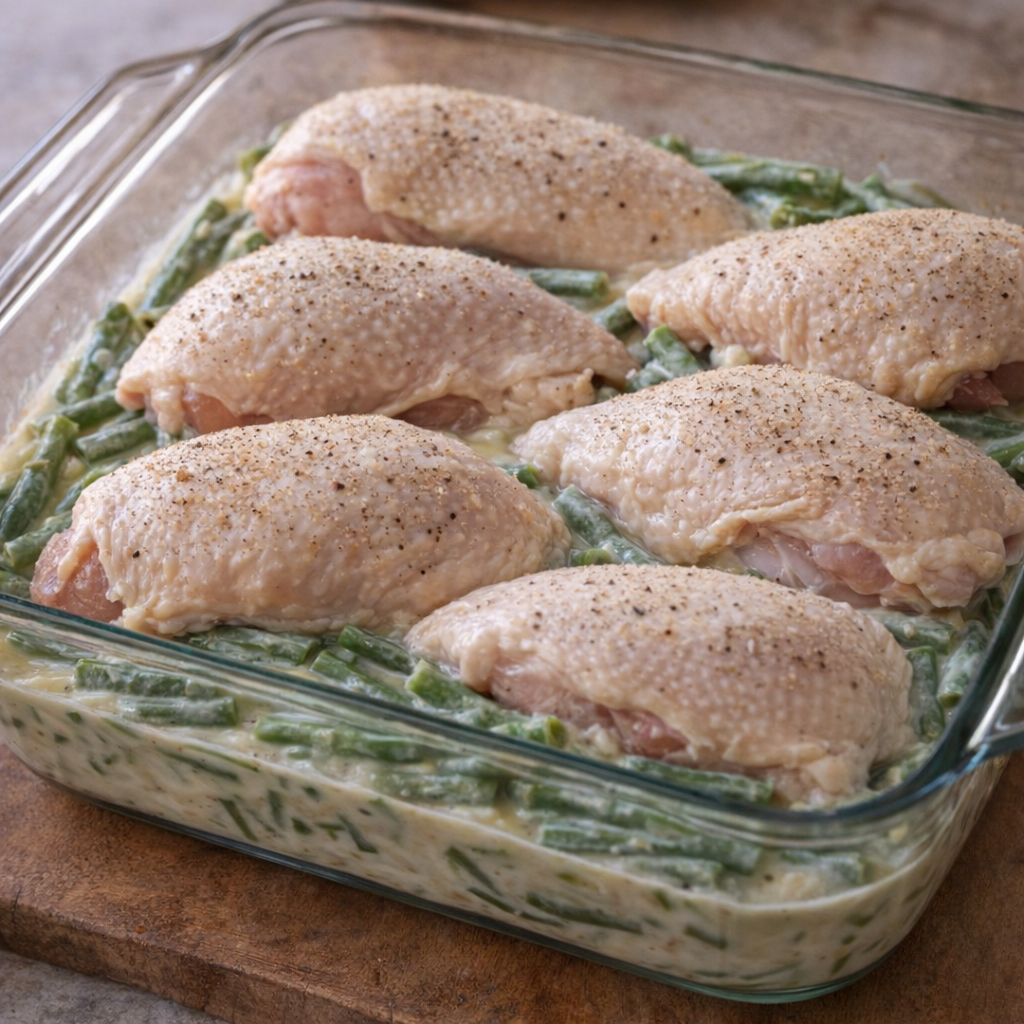
Chicken arranged over green beans in glass baking dish

Place the baking dish on the middle rack of the preheated oven and bake, uncovered, for 50 to 60 minutes, or until the chicken is cooked through (an instant-read thermometer should read 165°F/74°C in the thickest part) and the skin is golden with browned edges. The sauce around the sides of the glass dish should be bubbling.

If you’d like the top a little more browned, move the dish to the top rack for the last 5 to 10 minutes of baking, watching closely so it doesn’t scorch.

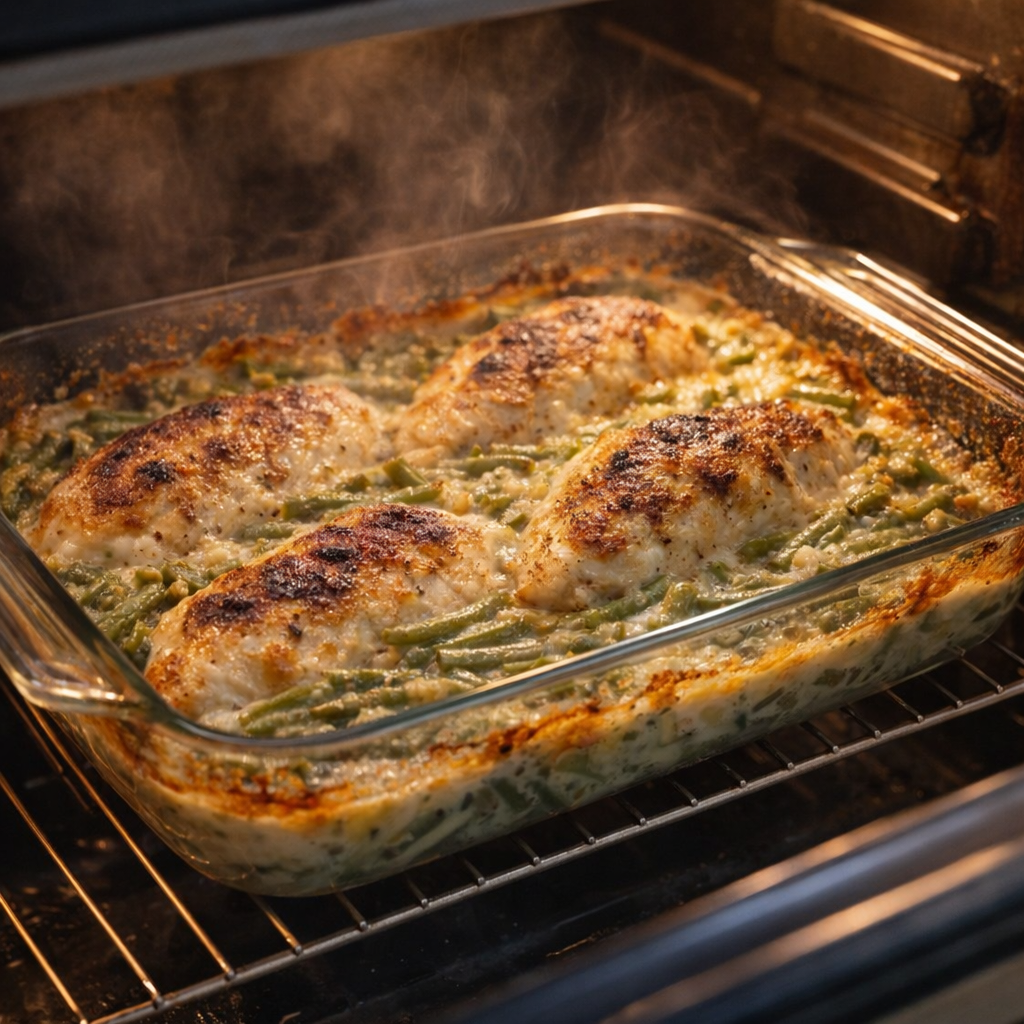
Freshly baked chicken and green bean casserole in the oven

Remove the dish from the oven and let it rest for about 5 minutes so the bubbling settles and the juices thicken slightly. Serve the chicken with a generous spoonful of the green beans and sauce from the bottom of the dish.

Variations & Tips

For a creamier dish, stir 1/4 cup of milk or half-and-half into the soup and onion mix before spreading it over the green beans (this technically adds a fifth ingredient, but it’s a nice option if you don’t mind stretching the rules).

You can swap the cream of mushroom soup for cream of chicken or cream of celery if that’s what you keep on hand; each gives a slightly different but still very homey flavor. If you prefer white meat, use bone-in, skin-on chicken breasts and check for doneness around 40 to 45 minutes so they don’t dry out.

For a bit more browning and texture, you can briefly broil the top at the end, watching carefully. To make cleanup easier, line the baking dish with a light coating of cooking spray before adding the green beans.

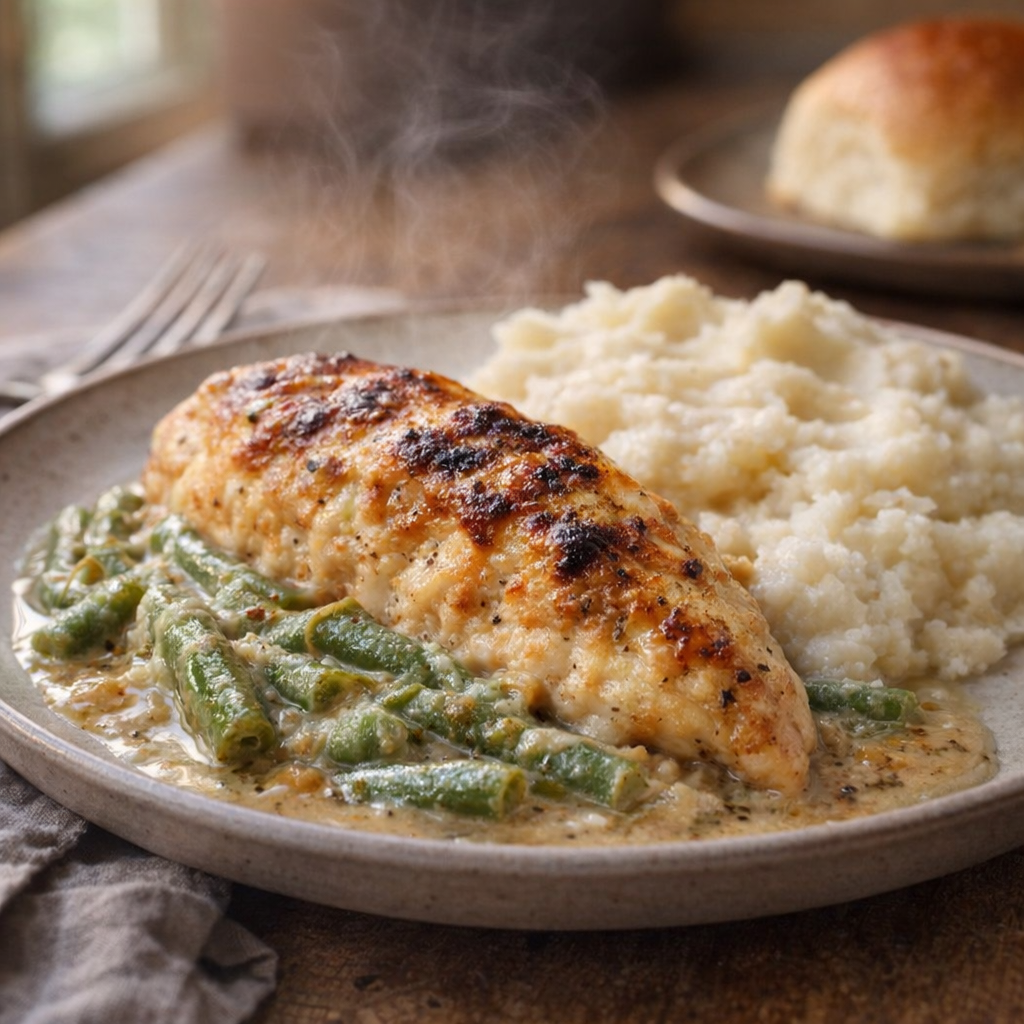
Served chicken and green beans on a dinner plate

Leftovers reheat well in a low oven, covered with foil, until warmed through; the flavors actually deepen by the next day. If you need to feed more people, you can snug a few extra chicken pieces on top and add another small handful of green beans underneath, but don’t crowd the pan so much that the chicken can’t brown.

April Comfort

by


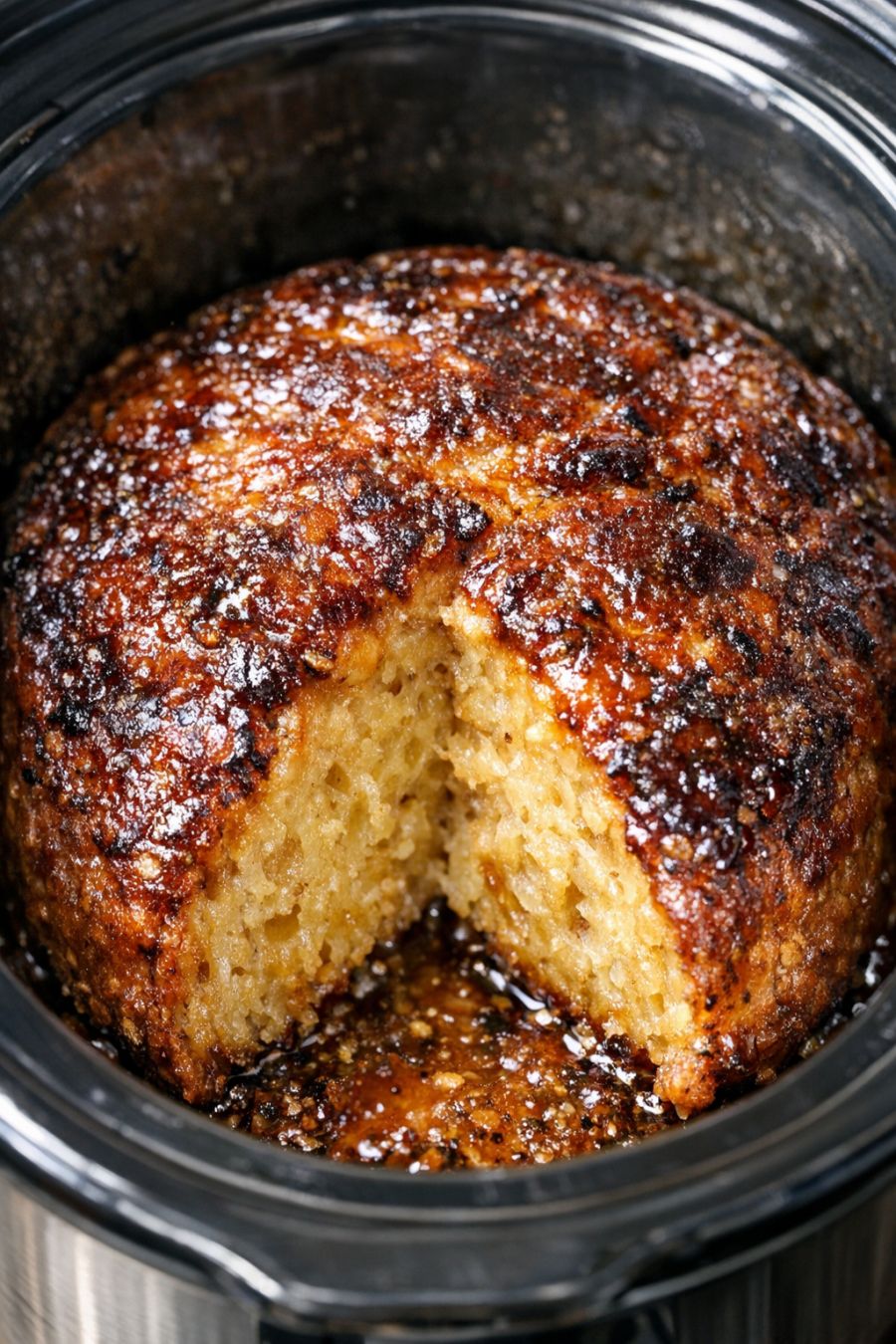
 This 4-ingredient slow cooker snickerdoodle bar recipe is my quiet little April comfort—something I throw together when I want the house to smell like a bakery while I’m busy prepping Sunday dinner. It leans on a simple cake mix shortcut, but the long, gentle heat of the slow cooker gives you a soft, chewy interior and a glistening caramelized cinnamon-sugar crust that feels like an old-fashioned snickerdoodle cookie bar.

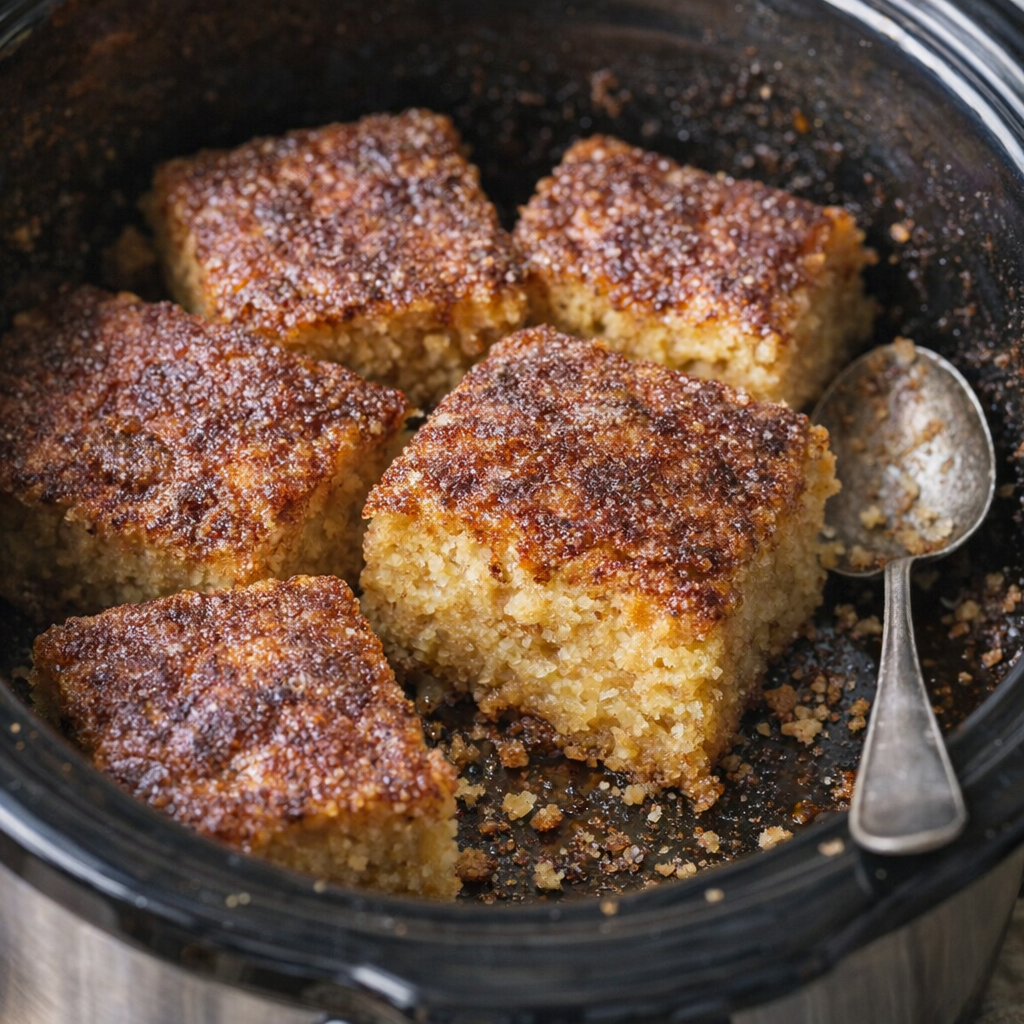
Slow cooker snickerdoodle bars served warm in the crock

It’s the kind of hands-off dessert that makes family meals feel special without adding more work to your plate.

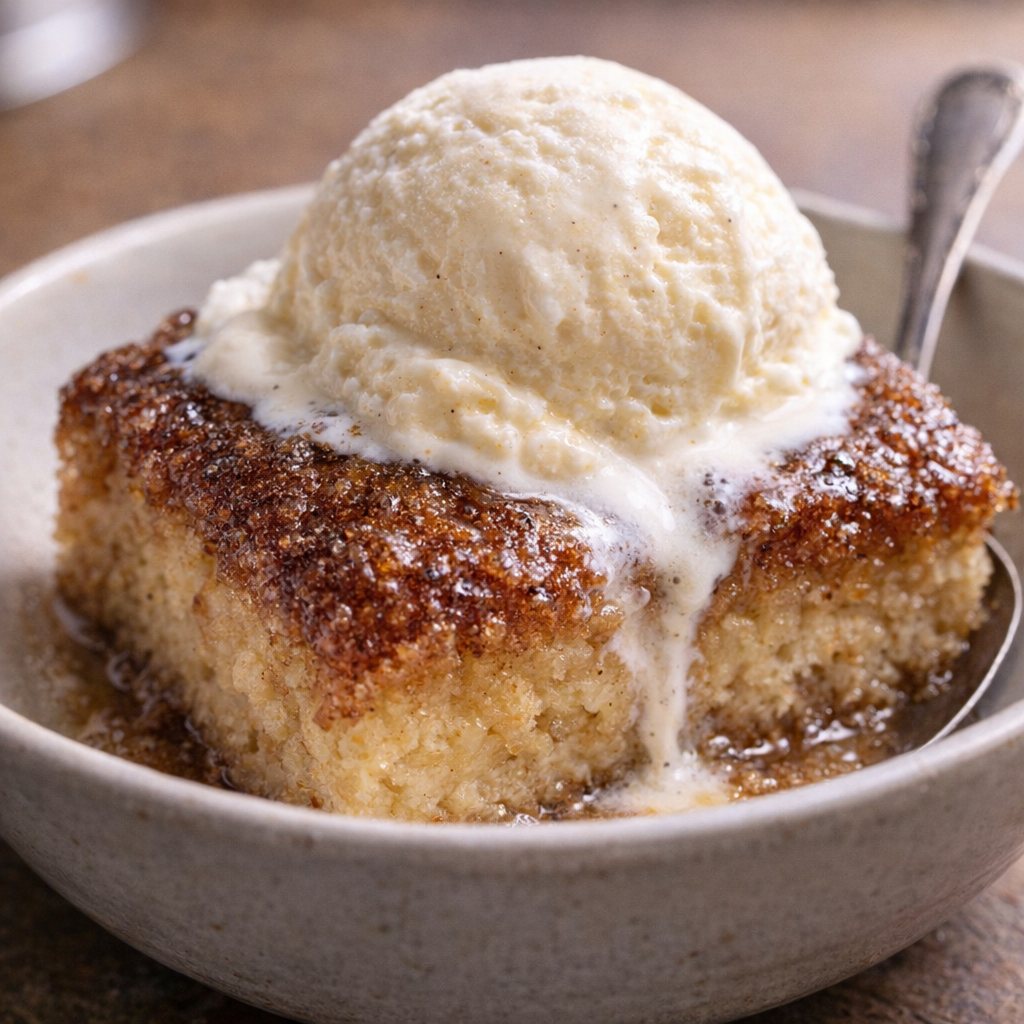
Let the bars cool slightly in the slow cooker, then cut into squares or scoop into bowls. These are wonderful served warm with a scoop of vanilla ice cream or a dollop of whipped cream so it melts into the chewy, golden interior. A cup of coffee, hot cocoa, or cold milk makes a cozy pairing.

Snickerdoodle bar topped with melting vanilla ice cream

If you’re serving Sunday dinner, I like to keep the main meal simple—roast chicken, mashed potatoes, and a green vegetable—then bring out these bars still in the slow cooker so everyone can see that caramelized crust and help themselves.

4-Ingredient Slow Cooker Snickerdoodle Bars

Servings: 8-10

Ingredients

1 box (15.25 oz) yellow cake mix

1/2 cup (1 stick) unsalted butter, melted and slightly cooled
2 large eggs
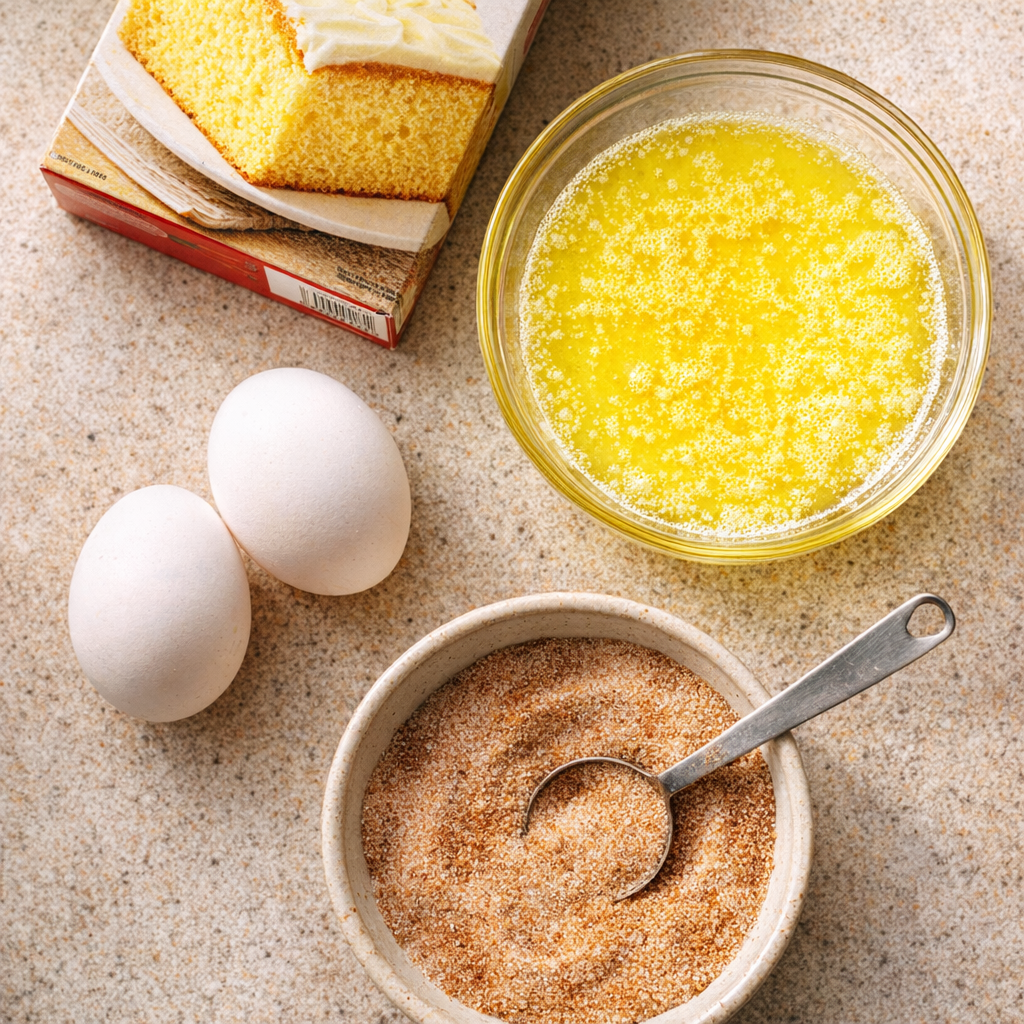
1/3 cup granulated sugar mixed with 1 tablespoon ground cinnamon (for topping and lining)

Simple snickerdoodle bar ingredients on a kitchen counter

Directions

Lightly grease the insert of a 4- to 6-quart slow cooker with butter or nonstick spray. This helps the bars release easily and encourages that caramelized edge.

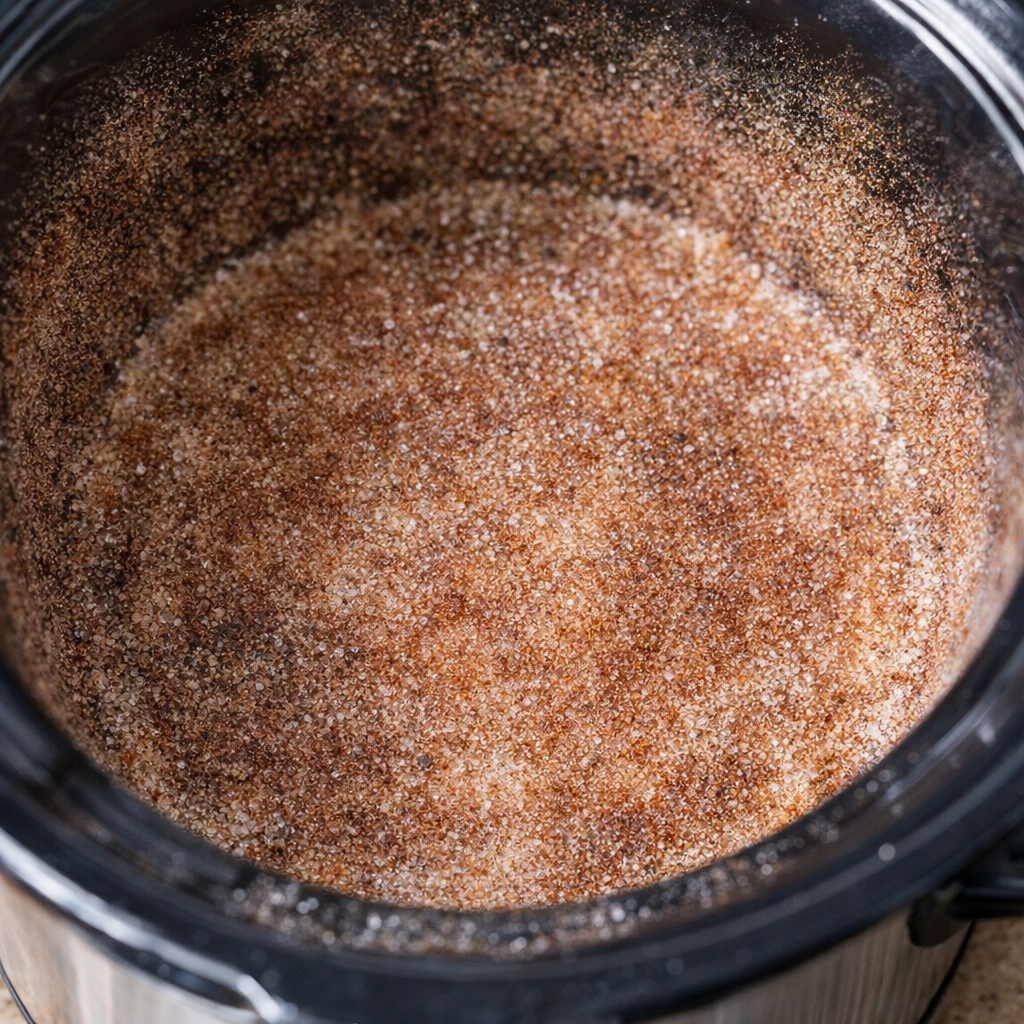
Sprinkle 2 to 3 tablespoons of the cinnamon-sugar mixture evenly over the bottom and about 1 inch up the sides of the greased slow cooker insert. This creates a flavored “crust” that will turn glistening and caramelized as it cooks.

Cinnamon sugar coating the inside of a slow cooker insert

In a medium mixing bowl, whisk together the melted butter and eggs until smooth and glossy.

Add the dry yellow cake mix to the bowl and stir with a spatula or wooden spoon until a thick, smooth batter forms. It will be quite dense—keep stirring until no dry pockets of mix remain.

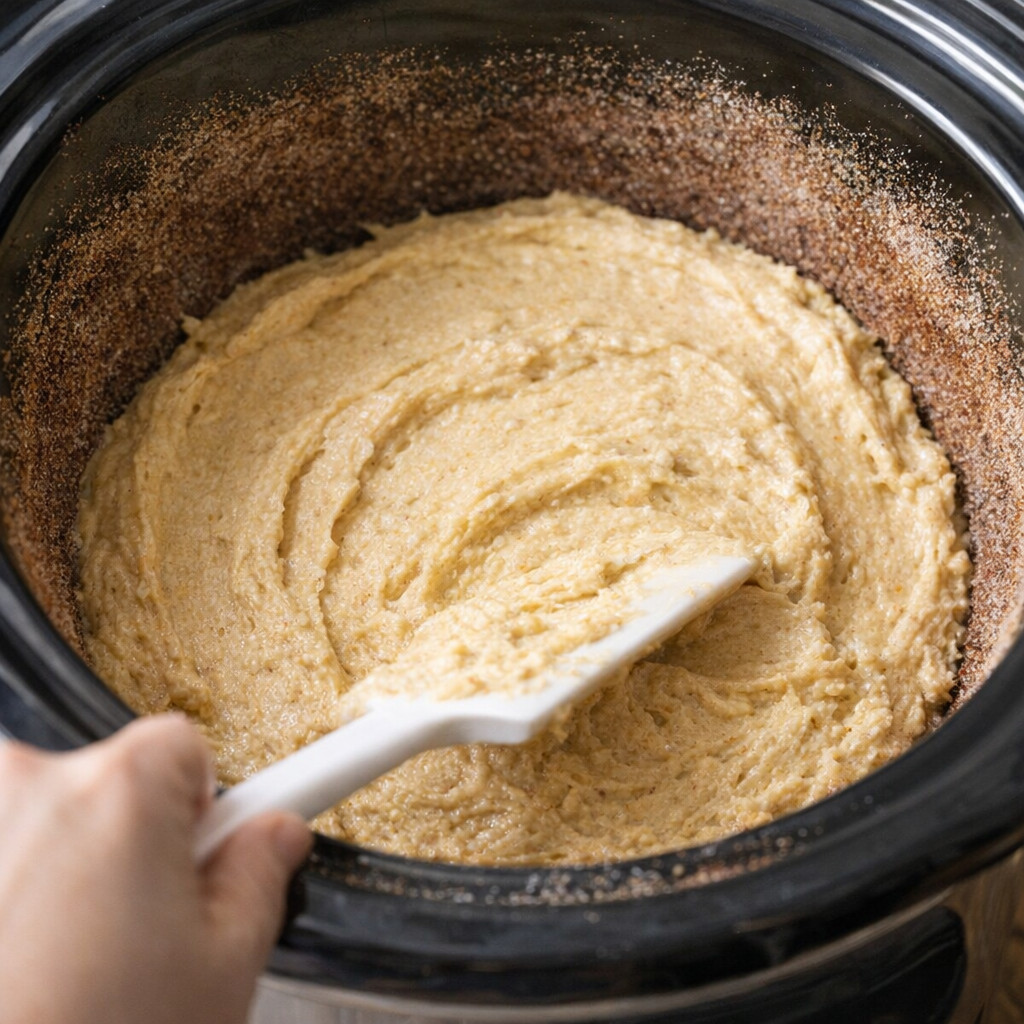
Spoon the batter into the prepared slow cooker insert. Use a spatula to spread it into an even layer, gently pressing it toward the cinnamon-sugar–coated sides.

Thick snickerdoodle batter being spread in the slow cooker

Sprinkle the remaining cinnamon-sugar mixture evenly over the top of the batter, covering it from edge to edge. This is what will form the glistening caramelized crust on top.

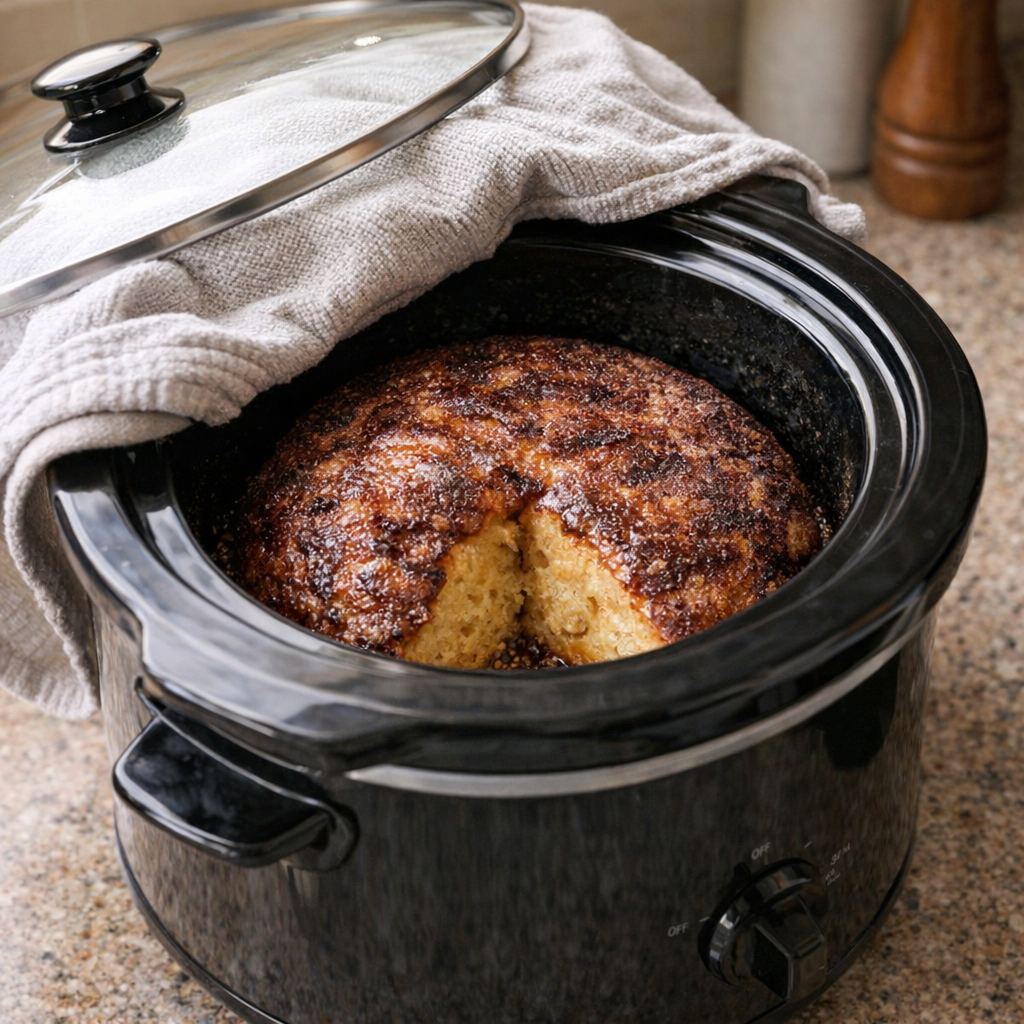
Cover the slow cooker with a clean kitchen towel, then place the lid on top of the towel. The towel catches condensation so the top of the bars can set and caramelize instead of getting soggy.

Slow cooker covered with a kitchen towel under the lid

Cook on LOW for 2 to 3 hours, or until the edges are deeply golden and caramelized and the center is just set but still soft when lightly pressed. Every slow cooker runs a bit differently, so begin checking around the 2-hour mark. Avoid lifting the lid too often so you don’t lose heat.

Once done, turn off the slow cooker and let the bars rest, covered, for 15 to 20 minutes. This helps the chewy interior finish setting while keeping that glossy, crackly cinnamon-sugar top intact.

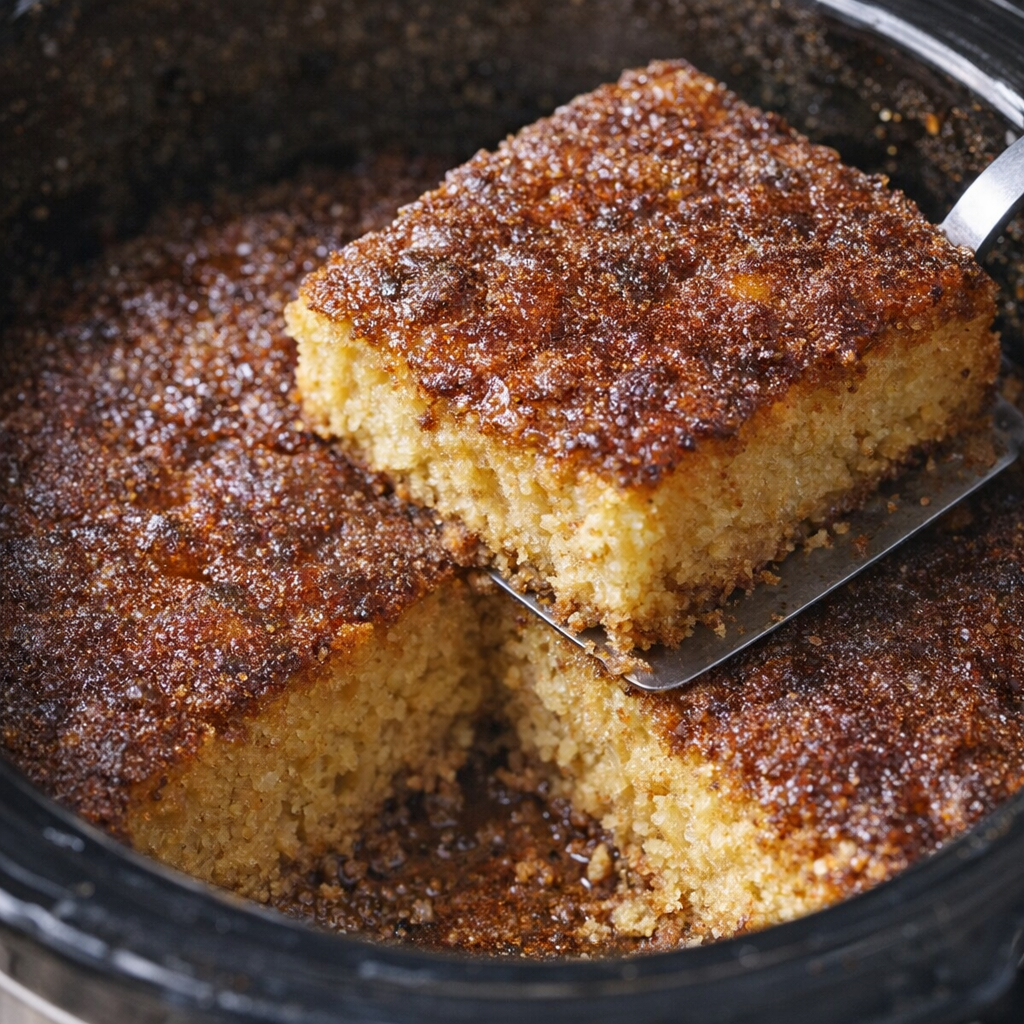
Run a thin spatula or butter knife around the edge to loosen. You can cut the bars directly in the slow cooker, or lift them out in sections using a wide spatula. Serve warm for the best texture, enjoying the contrast between the caramelized crust and the soft, golden interior.

Freshly cooked snickerdoodle bars with a crackly cinnamon top

Variations & Tips

For picky eaters who don’t love a strong cinnamon flavor, cut the cinnamon in half and replace some of the topping sugar with plain granulated sugar to keep the crust sweet but milder. If you prefer a deeper, almost toffee-like flavor, swap half of the granulated sugar for light brown sugar in the cinnamon-sugar mixture.

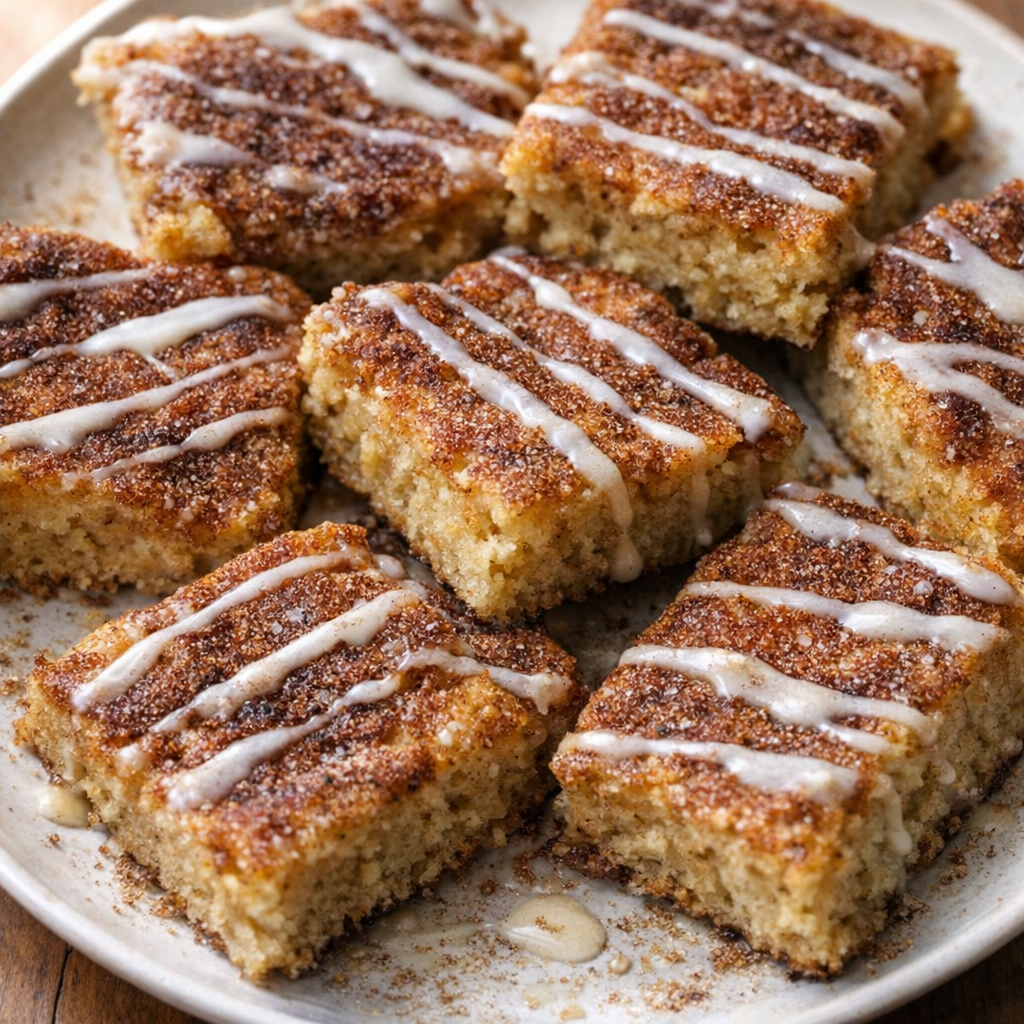
For a slightly richer, more custardy interior, stir in 1 teaspoon of vanilla extract with the butter and eggs. To dress this up for company, drizzle the cooled bars with a simple glaze (powdered sugar plus a splash of milk and vanilla) or a thin caramel sauce just before serving.

Snickerdoodle bars drizzled with glaze on a serving plate

You can also turn this into a fun sundae bar: keep the snickerdoodle bars warm in the slow cooker on the “keep warm” setting and set out bowls with ice cream, whipped cream, and a few toppings so everyone can build their own dessert. If you’re short on time, you can cook on HIGH for about 1 1/2 to 2 hours, but watch closely near the end so the crust caramelizes without burning.

My aunt used to make this when the pantry looked

by


 This is one of those humble little recipes that proves you can make something cozy and comforting even when the pantry looks empty. My aunt used to throw this together on busy weeknights or at the end of a pay period, and the whole house would fill with the smell of cabbage slowly browning in butter. It sounds almost too plain—just cabbage, egg noodles, and butter—but the magic truly happens in the pan.

The cabbage gets soft and caramelized around the edges, the noodles soak up all that buttery flavor, and before you know it, people start wandering into the kitchen asking, “What smells so good?”

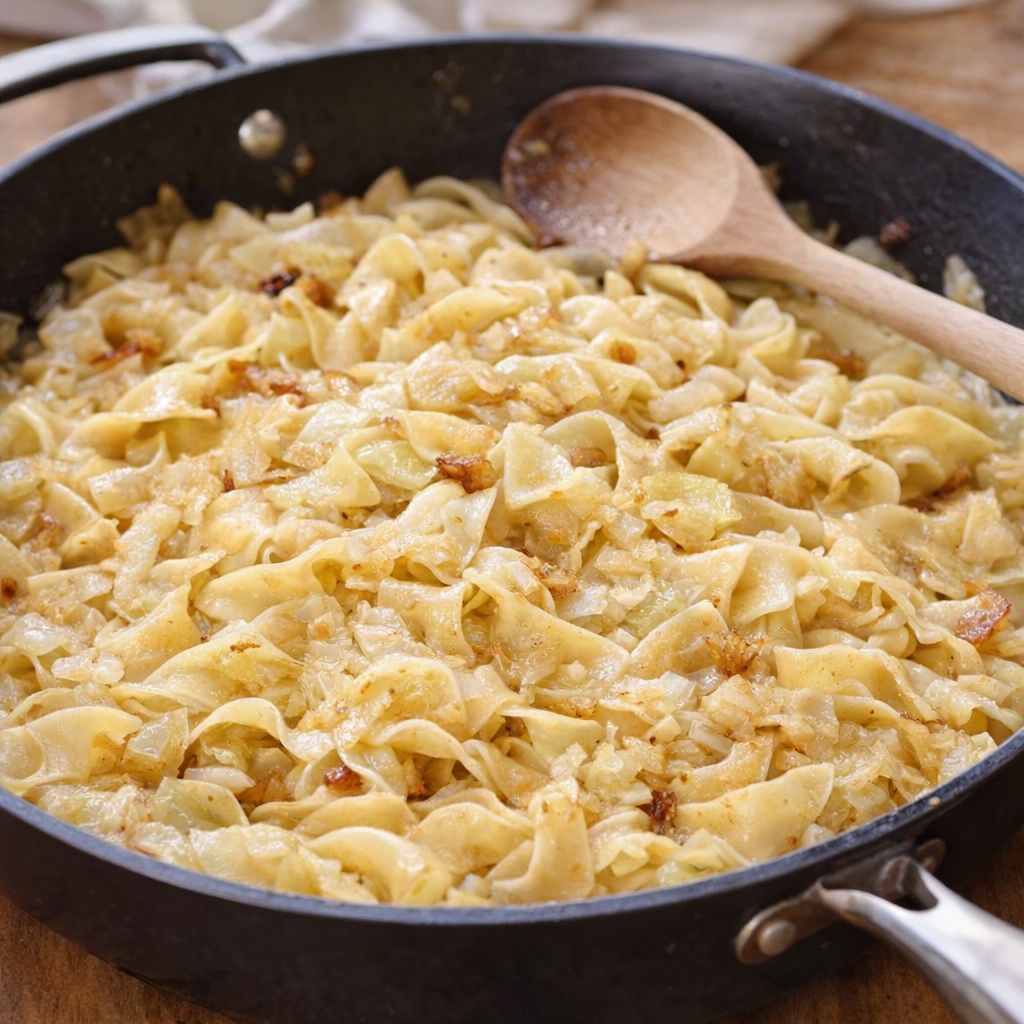
Butter-browned cabbage and egg noodles in a skillet

Serve these buttery cabbage and egg noodles straight from a warm glass casserole dish with a simple green salad or sliced fresh tomatoes on the side. It pairs nicely with roasted or grilled sausage, leftover chicken, or a couple of fried eggs if you want to turn it into a heartier meal.

A little black pepper at the table and maybe some crusty bread to swipe up the buttery bits from the bottom of the dish make it feel like a complete, stick-to-your-ribs supper.

3-Ingredient Cabbage and Egg Noodles

Servings: 4

Ingredients

8 tablespoons (1 stick) unsalted butter, divided

1 medium green cabbage (about 2 to 2 1/2 pounds), cored and thinly sliced into shreds
12 ounces wide egg noodles, uncooked
1 1/2 teaspoons kosher salt, plus more to taste
1/2 teaspoon freshly ground black pepper, optional for serving

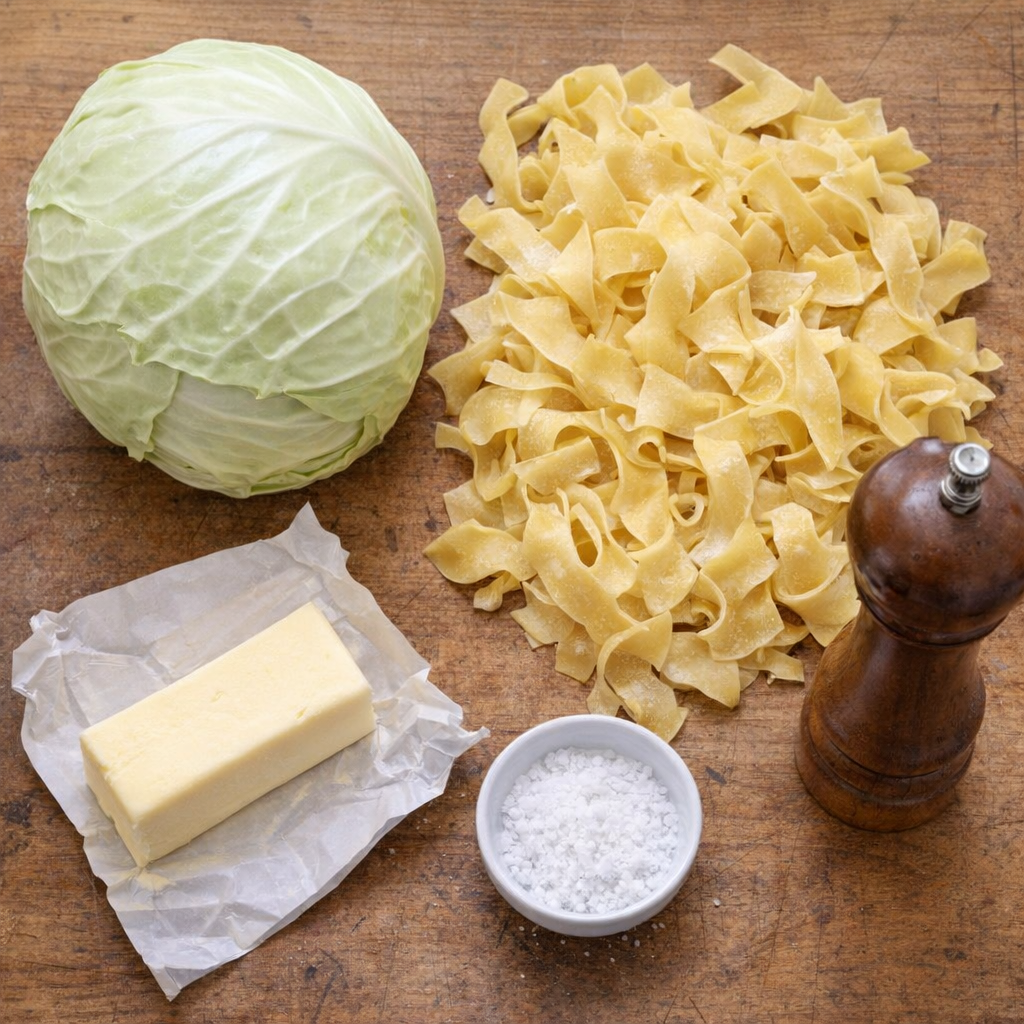
Simple cabbage noodle ingredients on a kitchen counter

Directions

Bring a large pot of salted water to a boil. While you wait, core the cabbage and slice it into thin shreds, like wide ribbons. This helps it melt down and tangle nicely with the noodles.

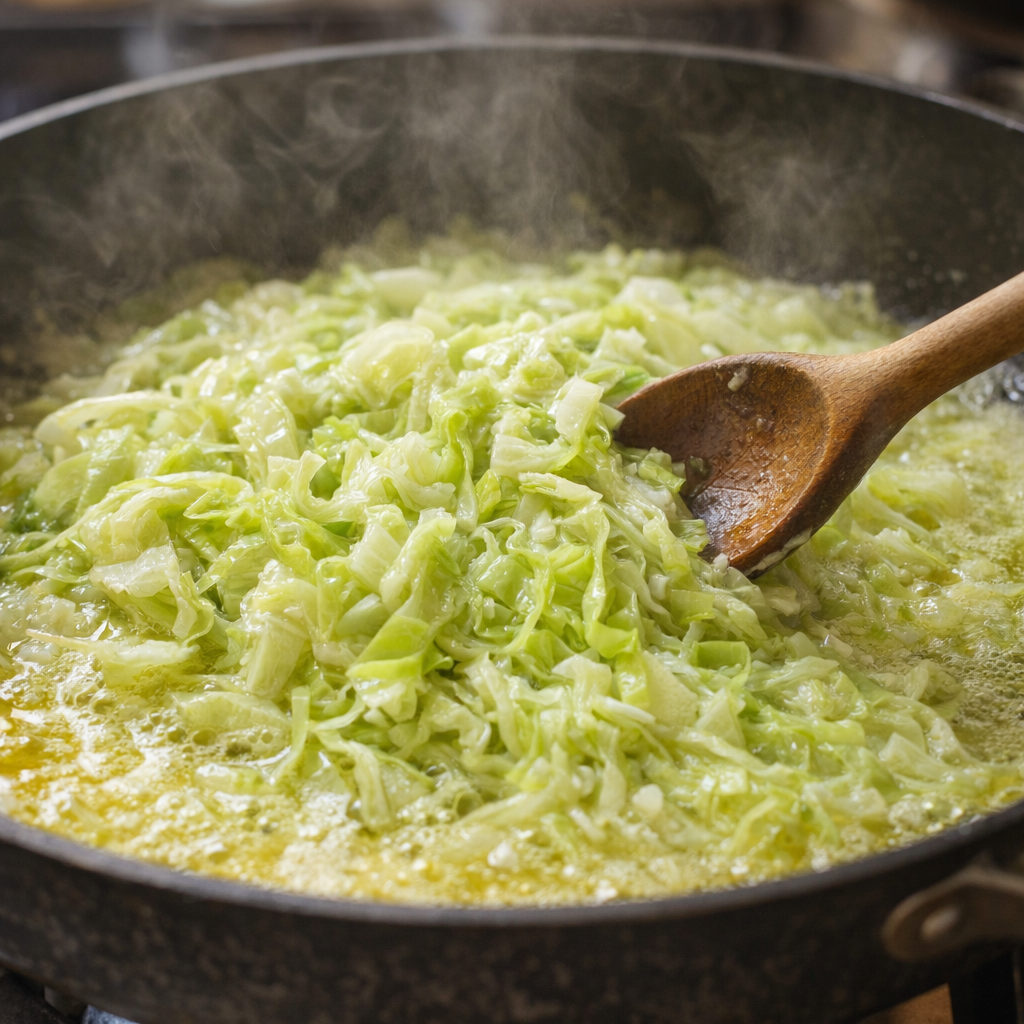
In a large, deep skillet or wide pot, melt 6 tablespoons of the butter over medium heat. Add the shredded cabbage and 1 teaspoon of the salt. It will look like too much at first, but it cooks down. Stir to coat the cabbage in the melted butter.

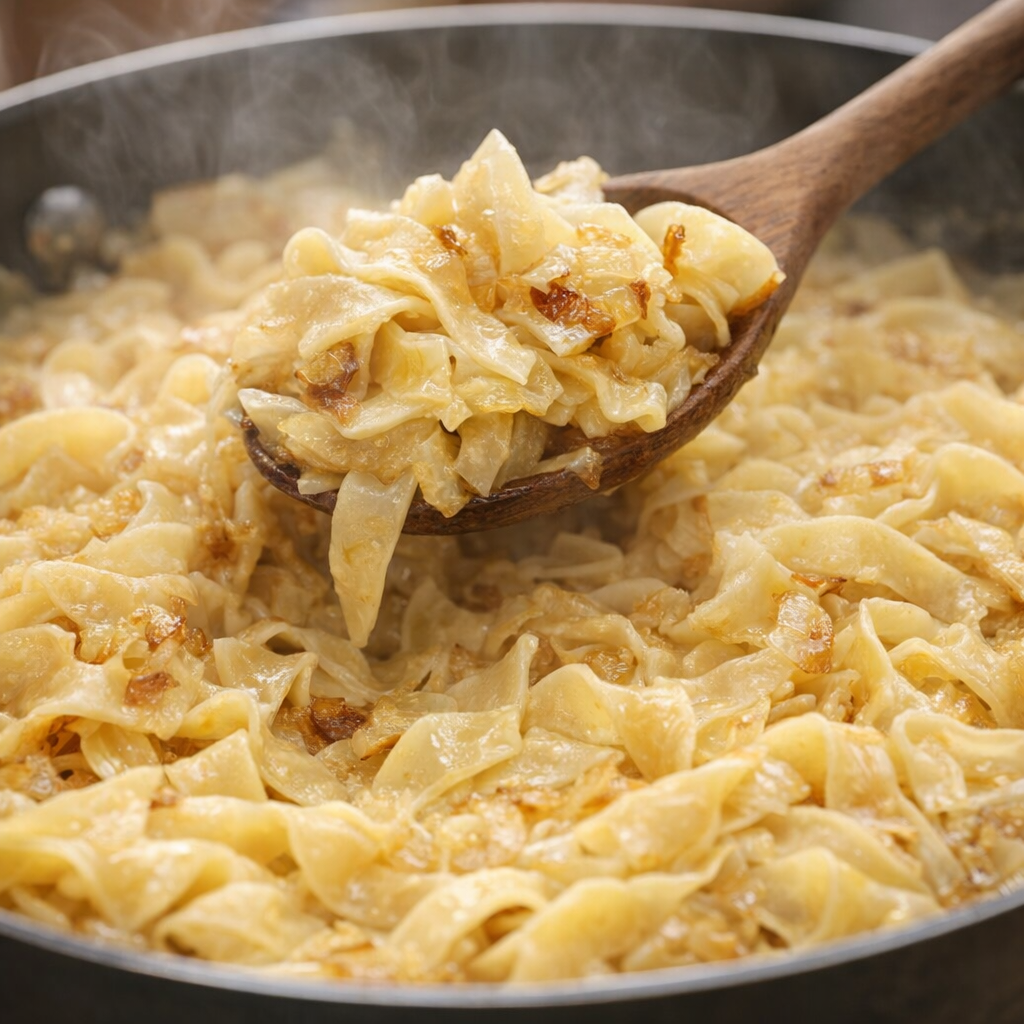
Shredded cabbage cooking in melted butter

Cook the cabbage over medium to medium-low heat, stirring every few minutes, for 20 to 25 minutes. You want it very soft and lightly browned in spots, with some edges caramelized. If it starts to brown too fast, turn the heat down.

The slow, gentle browning is what gives you that incredible smell and flavor.

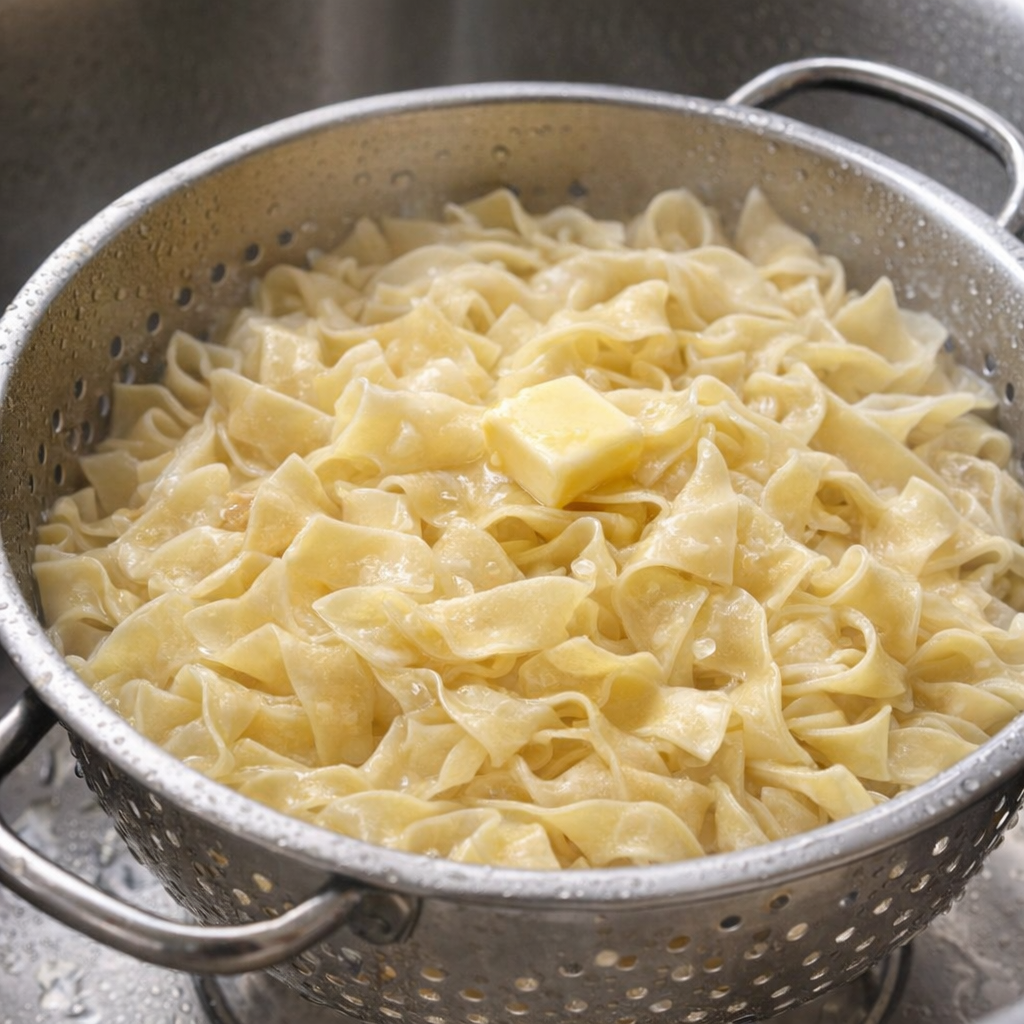
While the cabbage is cooking, boil the egg noodles according to the package directions until just tender. Drain well and set aside. If they’re done early, toss them with a small pat of butter to keep them from sticking.

Cooked egg noodles draining in a colander

When the cabbage is tender and golden in places, taste and adjust the salt if needed. Add the cooked egg noodles directly into the pan with the cabbage.

Add the remaining 2 tablespoons of butter to the pan. Toss everything together over low heat until the butter melts and the noodles and cabbage are well combined and glossy. If the pan seems dry, you can add another tablespoon of butter or a splash of the noodle cooking water.

Cabbage and noodles being tossed together in the pan

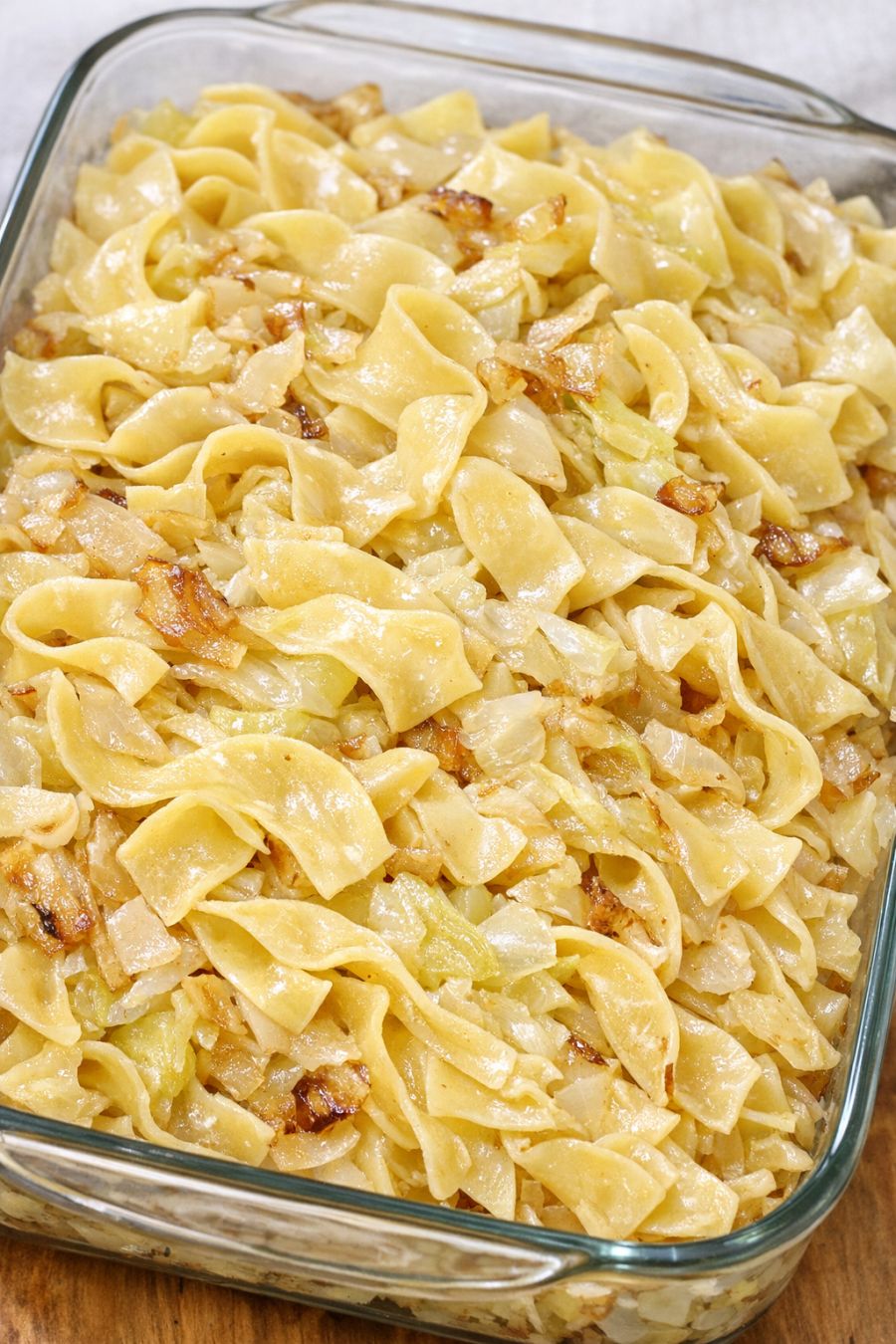
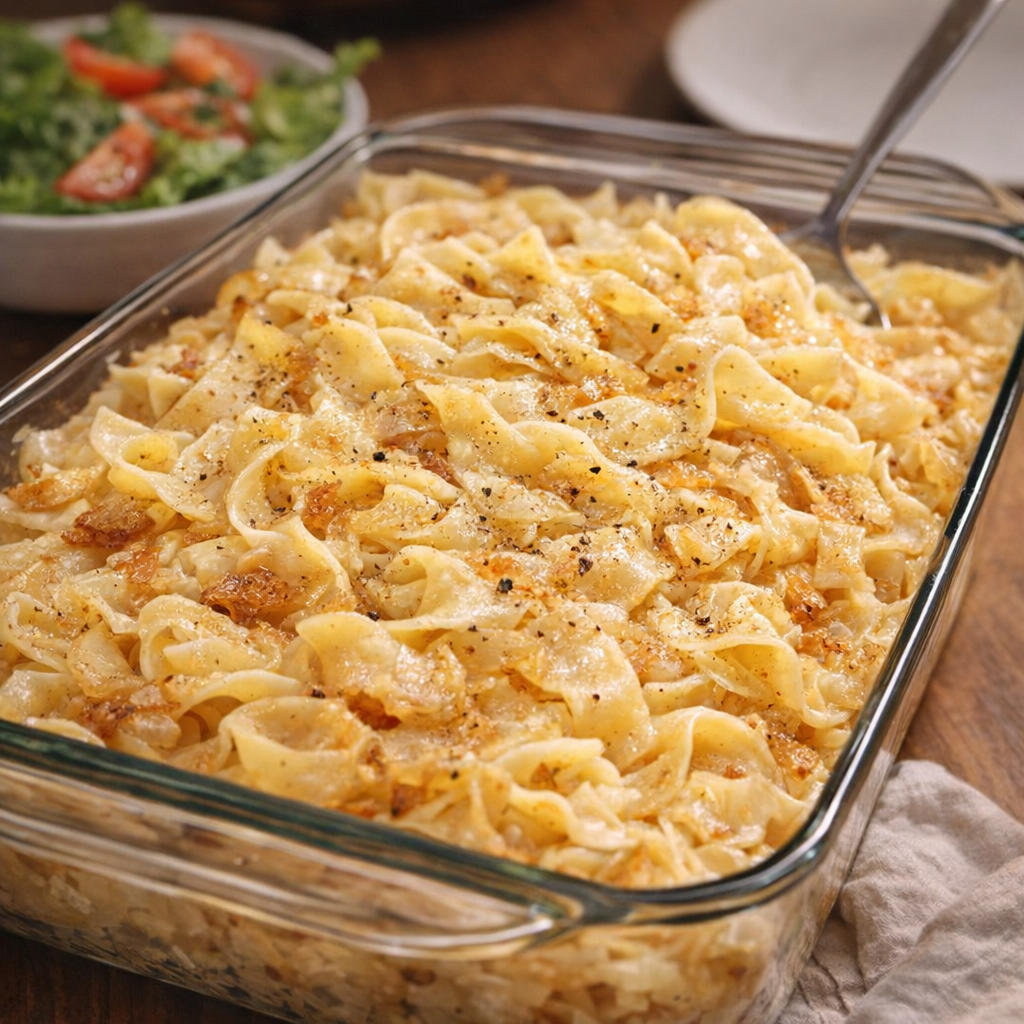
Transfer the mixture to a glass casserole dish and smooth it out a bit. The warmth of the dish helps keep everything cozy, and it looks inviting on the table. Sprinkle with black pepper if you like.

Let it sit for 5 minutes before serving so the flavors settle and the noodles soak up the buttery cabbage juices. Serve warm, right from the glass dish, and don’t be surprised when people wander into the kitchen asking for a taste.

Finished cabbage and egg noodles in a glass casserole dish

Variations & Tips

For picky eaters, you can chop the cabbage a bit finer so it blends in more with the noodles, or start with half a cabbage the first time you make it. If your family likes a little extra richness, stir in a spoonful of sour cream or a splash of heavy cream at the end for a creamier version.

To add protein, toss in sliced cooked sausage, leftover rotisserie chicken, or crisp bacon bits right before serving. For more flavor without adding many ingredients, try a pinch of garlic powder or onion powder while the cabbage cooks, or finish the dish with a sprinkle of grated Parmesan or cheddar cheese over the top.

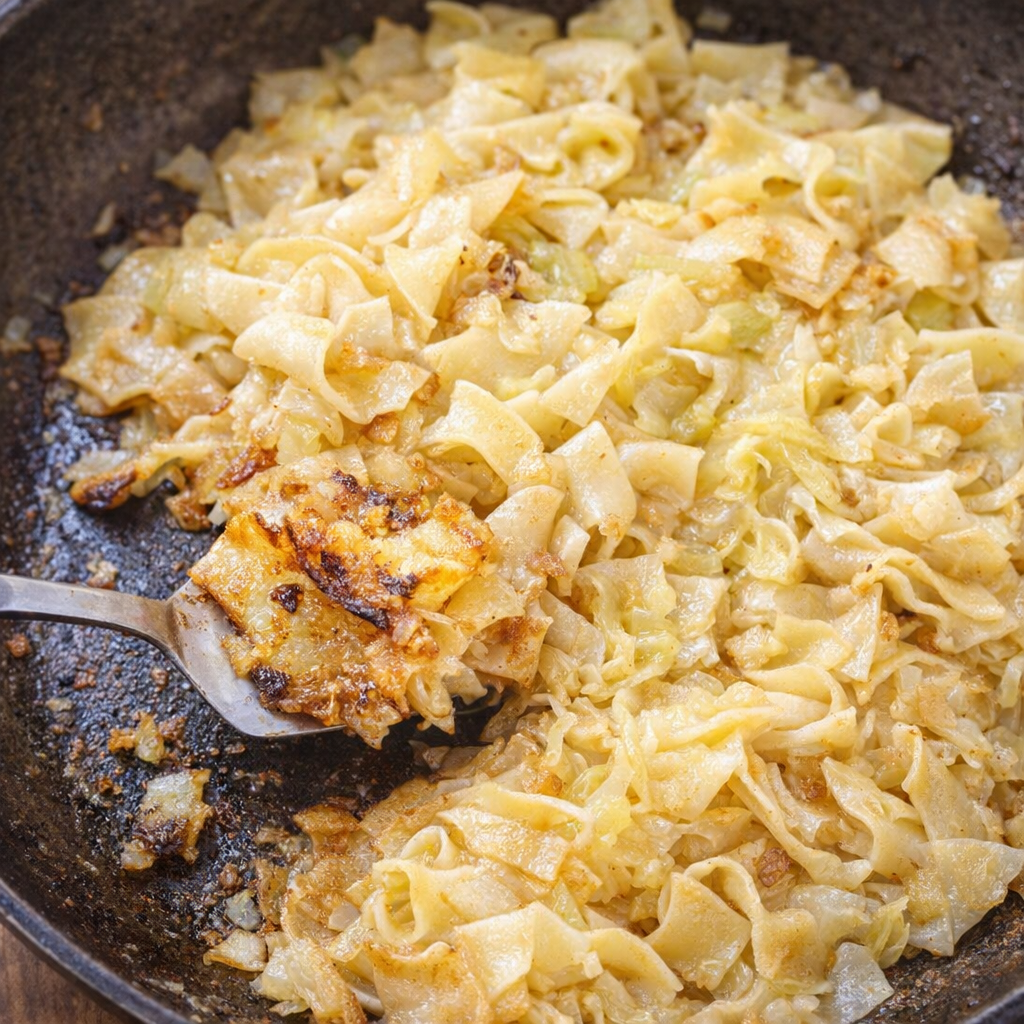
If you need to keep it lighter, you can use half butter and half olive oil. Leftovers reheat well in a skillet with a tiny bit of butter or water—press it down in the pan and let the bottom get a little crispy for a fun, toasty twist.

Crispy reheated cabbage noodles in a skillet

A depression era way to turn leftovers into something

by

Fried cornmeal mush is one of those old-school comfort foods that feels like a warm hug from a Midwestern grandma. It starts with a simple pot of cooked cornmeal, chilled until firm, then sliced and pan-fried until the edges get crisp and golden. My mom used to make a big batch on Sunday, and all week we’d fry up slices for quick breakfasts or lazy brinners when everyone was too tired to cook. It’s budget-friendly, filling, and surprisingly versatile—you can go sweet with maple syrup or savory with eggs and bacon. If you’re looking for a simple, nostalgic recipe that works for busy weekdays and cozy weekends alike, this fried cornmeal mush definitely earns a spot in your rotation.
Fried cornmeal mush slices are super flexible, which makes them perfect for a busy schedule. For a classic breakfast plate, serve them with scrambled or fried eggs, crispy bacon or sausage, and a drizzle of maple syrup or a pat of butter on top. If you’re leaning savory, try them alongside sautéed greens, roasted veggies, or a simple salad for a light dinner. They also pair well with chili or stew—use the slices almost like cornbread on the side. For kids (or your own inner child), serve with fruit and a little honey or jam. The slices reheat well in a skillet or toaster oven, so you can build quick meals around them all week.
Crispy Fried Cornmeal Mush Slices
Servings: 4 servings

Ingredients
3 cups water, divided
1 cup yellow cornmeal
1 teaspoon salt
1 tablespoon butter (optional, for flavor in the mush)
2–3 tablespoons neutral oil or butter, for frying
Optional for serving: maple syrup, honey, jam, or butter for sweet; salt, pepper, and hot sauce for savory
Directions
Prepare the pan: Lightly grease a loaf pan, small baking dish, or 8x8-inch pan with a bit of oil or butter. This is where the cornmeal mush will chill and set.
Mix the cornmeal: In a medium bowl, whisk together 1 cup of the water with the cornmeal until smooth. This helps prevent lumps later.
Cook the mush: In a medium saucepan, bring the remaining 2 cups of water and the salt to a gentle boil over medium heat. Once boiling, reduce the heat to low and slowly pour in the cornmeal mixture, whisking constantly.
Simmer until thick: Continue to cook the mixture over low heat, stirring frequently with a wooden spoon or spatula, for about 10–15 minutes, or until very thick and pulling away from the sides of the pan. Stir in the tablespoon of butter, if using, for extra richness.
Chill the mush: Transfer the hot cornmeal mixture to the prepared pan. Smooth the top with a spatula, pressing it down to remove air pockets. Let it cool at room temperature for 15–20 minutes, then cover and refrigerate for at least 2 hours, or until firm. For easiest slicing, chill it overnight.
Slice the mush: Once fully chilled and firm, run a knife around the edges of the pan and gently turn the mush out onto a cutting board. Slice into 1/2-inch to 3/4-inch thick pieces, depending on how sturdy you want them.
Heat the skillet: In a large nonstick or well-seasoned cast iron skillet, heat 2–3 tablespoons of oil or butter over medium heat until hot and shimmering.
Fry the slices: Carefully add the cornmeal mush slices in a single layer, without overcrowding the pan. Fry for 4–5 minutes per side, or until the outsides are golden brown and crisp. Adjust the heat as needed so they brown but don’t burn.
Drain and serve: Transfer the fried slices to a plate lined with a paper towel to drain any excess oil. Serve warm with your choice of toppings—maple syrup or jam for sweet, or a sprinkle of salt, pepper, and hot sauce for savory.
Variations & Tips
For a cheesy twist, stir 1/2 to 1 cup of shredded cheddar or parmesan into the hot cornmeal mush before chilling; this version is great served with eggs or a simple salad. If you prefer whole grains, swap part of the water for milk to make the mush creamier, or use a medium-grind cornmeal for more texture. For a slightly sweeter breakfast-style mush, add 1–2 tablespoons of sugar or honey to the cooking liquid and top the fried slices with fruit and yogurt. You can also season the base with garlic powder, black pepper, or a pinch of smoked paprika if you know you’ll serve it as a savory side. To save time on busy mornings, make the mush the night before and keep it chilled in the pan for up to 3–4 days; just slice and fry what you need. Leftover fried slices reheat well in a dry skillet or toaster oven, so consider doubling the batch if you want easy, ready-to-go sides for the week.


Saturday, March 28, 2026

My Irish neighbor brought these

by


 These oven baked 4-ingredients Irish nachos are the kind of potluck dish that disappears before you can even set the pan down. Instead of tortilla chips, thinly sliced potatoes form the base—an idea often credited to Irish pubs in the U.S. that wanted something heartier and more familiar to potato-loving crowds. Here, we keep it wonderfully simple: potatoes, sharp cheddar, bacon, and green onions. Everything bakes on one foil-lined sheet pan, giving you crispy edges, gooey cheese, and smoky bacon in under an hour with almost no cleanup.

Serve these Irish nachos straight from the sheet pan while they’re still hot and the cheese is stretchy. They pair well with cold beer, hard cider, or a simple sparkling water with lime. For dipping, set out small bowls of sour cream or plain Greek yogurt and a bit of hot sauce or grainy mustard. They’re perfect as a game-day snack, a casual appetizer for a potluck, or as a fun side next to grilled sausages, burgers, or a big green salad to balance the richness.
Oven Baked 4-Ingredients Irish Nachos
Servings: 6

Ingredients
2 pounds russet potatoes, scrubbed and thinly sliced into 1/8–1/4 inch rounds
8 ounces sharp cheddar cheese, shredded
6 slices thick-cut bacon, cooked crisp and crumbled
3 green onions, thinly sliced
Directions
Preheat your oven to 425°F (220°C). Line a large rimmed baking sheet with aluminum foil for easy cleanup.
Scrub the potatoes well and pat them dry. Leaving the skins on, slice the potatoes into 1/8–1/4 inch thick rounds. Try to keep the slices as even as possible so they cook at the same rate.
Spread the potato slices in a single, slightly overlapping layer on the foil-lined baking sheet. You want the pan mostly covered, but avoid stacking them too high or they’ll steam instead of crisp.

Bake the potatoes on the middle rack for 20–25 minutes, flipping them once halfway through, until the edges are golden and the centers are tender when pierced with a fork.

While the potatoes bake, cook the bacon in a skillet over medium heat until crisp. Transfer to a paper towel–lined plate to drain, then crumble or chop into small pieces. Shred the cheddar cheese and slice the green onions.
When the potatoes are tender and browned around the edges, remove the pan from the oven. Gently nudge the slices closer together so there are fewer gaps, creating a solid “chip” layer.

Sprinkle the shredded cheddar evenly over the hot potatoes, covering as many slices as possible. Scatter the crumbled bacon over the cheese.

Return the pan to the oven and bake for another 5–8 minutes, just until the cheese is fully melted and bubbling and the bacon is sizzling.
Remove from the oven and immediately sprinkle the sliced green onions over the top for freshness and color.
Let the Irish nachos cool for a few minutes so the cheese can set slightly, then serve straight from the pan. Use a spatula to lift generous scoops of potatoes, cheese, and bacon onto plates.
Variations & Tips
For extra crispness, toss the potato slices lightly with 1–2 tablespoons of neutral oil and a pinch of salt and black pepper before baking (this technically adds an ingredient, but it doesn’t change the core 4-ingredient concept). You can also switch up the cheese: an Irish cheddar adds a nice nod to the name, while a mix of cheddar and Monterey Jack melts beautifully. If you prefer a bit of heat, sprinkle on a pinch of red pepper flakes or use a sharp, spicy cheddar. For a heartier version, layer on finely chopped cooked corned beef instead of, or in addition to, the bacon for a pub-style twist. To keep things slightly lighter, serve with a side of tangy plain Greek yogurt instead of sour cream for dipping. Finally, if you’re feeding a crowd, bake on two pans at once, rotating them halfway through so the potatoes brown evenly.

Top Ad 728x90